A hotel renovation protects a property's long-term value by fixing wear, meeting brand standards, and keeping guests satisfied. Planning the budget and the revenue side well in advance is what separates a renovation that pays for itself from one that just drains cash.
What Is a Hotel Renovation?
A hotel renovation means updating part or all of a property to fix wear, meet brand standards, and keep guests satisfied.
Renovations range from a minor refresh, like new paint and carpets, to a major overhaul touching plumbing, electrical, and HVAC systems. Some are brand-mandated through a property improvement plan, tied to a franchise agreement rather than the owner's own timeline.
For an independent owner, the type of renovation changes everything downstream. A minor refresh might come out of operating cash, while a major overhaul usually needs real financing and a longer closed-room timeline.
The scale of the work also changes who's involved, from a GM handling a minor refresh directly to an owner, contractor, and brand approval process for a major one. The trigger is rarely just the calendar either, since falling review scores or a brand's PIP notice often force the timing.
How Often Should You Renovate, and Where Should You Focus?
Most hotels refresh guest rooms every 3 to 5 years, plan a major renovation every 7 to 10 years, and focus spending on guest rooms, public spaces, and the exterior.
These cycles come from wear and brand standards, not a fixed calendar, but they're a useful planning baseline. A property that skips a cycle usually pays for it later, either in guest complaints or in a brand-mandated PIP that arrives with less warning than a self-scheduled refresh would have.
- Minor refresh: painting, new carpets, and updated lighting, done roughly every 3 to 5 years to keep the property looking current.
- Major renovation: plumbing, electrical, and HVAC upgrades, planned roughly every 7 to 10 years before systems start failing outright.
- Phased work: blocking off sections or scheduling during low-occupancy periods, which limits guest disruption regardless of project size.
- Guest rooms: worn furniture, outdated bathrooms, and the charging or streaming technology guests now expect as standard, not a bonus.
- Public spaces: the lobby, entryways, and flexible areas guests use to work or relax before and after their room time.
- Exterior: lighting, signage, and landscaping, since this shapes a guest's very first impression, often before they've even checked in.
Guest rooms tend to earn the renovation budget first, since this is where a guest spends the most time and forms the strongest opinion of the stay. Public spaces and the exterior matter more than owners often assume, since they shape the guest's impression before check-in even happens.
A property splitting a limited budget across all three areas at once often ends up with a shallow refresh everywhere instead of a real improvement anywhere. Prioritizing one area fully, rather than spreading the same dollars thin across all three, produces a result guests actually mention in reviews.
How Do You Budget and Fund a Renovation?
A realistic renovation budget builds in contingency from the start, and funding usually blends more than one source rather than a single loan.
Build a Realistic Budget With Contingency Built In
A contractor's initial quote rarely reflects the final cost, especially once walls come down and hidden issues surface behind them. Building in 10 to 20% contingency, without treating that number as slack for upgrades, keeps a renovation from running over budget.
Three practices catch the hidden-cost risk before it becomes a problem:
- Get quotes from at least three contractors, and ask each one what typically gets missed in an initial estimate for a property this age.
- Use a fixed-price contract with clearly defined scope, especially where hidden issues are likely, rather than a time-and-materials arrangement.
- Attach a number to every change order before work resumes, not after.
Owners should also budget for the revenue lost while rooms are offline, not just the construction cost itself, since that loss never shows up on a contractor's invoice.
A property blocking 15 rooms for six weeks during its slow season is losing real, calculable revenue, and that number belongs in the same budget conversation as the construction line items themselves.
A simple worksheet listing expected room nights lost, by week, against the property's typical rate makes this number concrete rather than an afterthought added once the invoices start arriving.
Fund the Work Without Derailing Cash Flow
Reserve funds set aside for capital expenditure usually cover routine refreshes without touching outside financing. A major renovation typically needs more than that.
Most owners end up blending sources rather than relying on one, and the options usually come down to three:
- A commercial loan, sized against the property's projected cash flow and the business plan built to support it.
- An SBA-backed loan, often available with a lower down payment than a conventional commercial loan.
- A brand incentive program, sometimes offered as favorable financing or a rebate tied to a mandated PIP.
An independent property without a brand relationship doesn't have that last option, which makes reserve planning even more important. Setting aside a fixed percentage of revenue toward capital expenditure every year keeps the next renovation from starting as a financial scramble.
Timing the draw against the low season is worth planning explicitly, so loan payments start before the property returns to full occupancy. Assuming revenue bounces back the moment construction ends is the most common budgeting mistake owners make.
Underfunding to avoid debt often costs more in the long run. A project that stalls halfway through leaves a property in a worse guest-facing state for longer than a fully funded one would, and a half-finished lobby sends a worse signal than an outdated but consistent one.
What Return Should You Expect From a Renovation?
A well-planned renovation tends to show up as higher rates and stronger reviews over time, not as an immediate spike the week the work finishes.
Guests notice a renovated property before an owner sees it in the numbers. Review scores and direct booking inquiries often improve within the first few months, well before rates catch up to the property's new standard.
Rate increases typically phase in gradually, tested against what the local market will actually support, rather than jumping immediately after the ribbon cutting. A property that renovates without adjusting its rate strategy afterward leaves money on the table.
A renovation is paying off once a few specific signs show up, not just a general sense that the property looks better:
- Review scores climb within the first few months after reopening.
- New rates hold against nearby competitor pricing, not just against the property's old rates.
- Room nights sold at the new rate begin covering the payback target within a season or two.
Thinking in terms of payback, how many additional room nights at the new rate it takes to cover the investment, gives a clearer target than a vague expectation of a return.
This doesn't mean every dollar needs its own calculation. It means having a rough target going in, so an owner can tell a renovation that's still ramping up from one that simply isn't working.
Market conditions outside the property's control still affect the timeline. A renovation finishing right before a strong local event season looks far more successful, on paper, than an identical project finishing into a slow quarter.
How Do You Protect Revenue While Rooms Are Offline?
Scheduling work during low-occupancy periods and phasing it floor by floor keeps the fewest rooms offline at any one time.
Blocking a full wing at once maximizes disruption to revenue, even if it finishes faster than working floor by floor. A property with four floors might renovate one floor per month instead, keeping three quarters of the room count sellable throughout most of the project.
Three practices protect revenue during the work itself:
- Reprice the reduced inventory that stays available. Fewer sellable rooms during a high-demand period can often support a higher rate, not a discount, if managed deliberately.
- Sync availability across every channel in real time. A channel manager and booking engine that update automatically stop blocked rooms from showing up as bookable on a third-party site.
- Communicate directly with affected guests. Pre-arrival messaging and clear signage about ongoing work heads off complaints that would otherwise land in a review instead of at the front desk.
Manually updating availability across several booking sites during a multi-month renovation is where mistakes creep in, and an overbooked room during construction is a far worse guest experience than a sold-out night.
Offering a modest rate adjustment or a small amenity to guests booked during active construction phases is often cheaper than the review damage a surprised, unhappy guest can cause afterward.
Sharing the renovation timeline with guests in advance, not just staff, sets expectations before anyone notices scaffolding or hears construction noise through a shared wall.
How Do You Track Revenue Recovery After a Renovation?
Comparing RevPAR before and after the renovation, month over month, is what actually proves whether the work paid for itself.
A single post-renovation month rarely tells the full story, since it usually overlaps with the tail end of construction disruption.
Comparing the same months year over year, rather than the months immediately before and after, filters out seasonal noise a simple before-and-after snapshot would miss entirely.
Three numbers are worth tracking side by side, before and after:
- RevPAR: the clearest single read on whether the renovation moved overall performance.
- ADR: to confirm the rate increase is holding rather than being propped up by occupancy alone.
- Occupancy: to rule out a rate increase that quietly cost the property bookings.
"The customer service is fantastic. Talking to the same people year after year is wonderful, I feel like we've built these tremendous relationships with the people at roommaster."
— Alex Moore, President and CEO of Seaboard Hotels
Seaboard Hotels, a customer for 25 years, saw at least 7% revenue growth every year before the pandemic using yield management, the same before-and-after discipline that applies to evaluating a renovation's return.
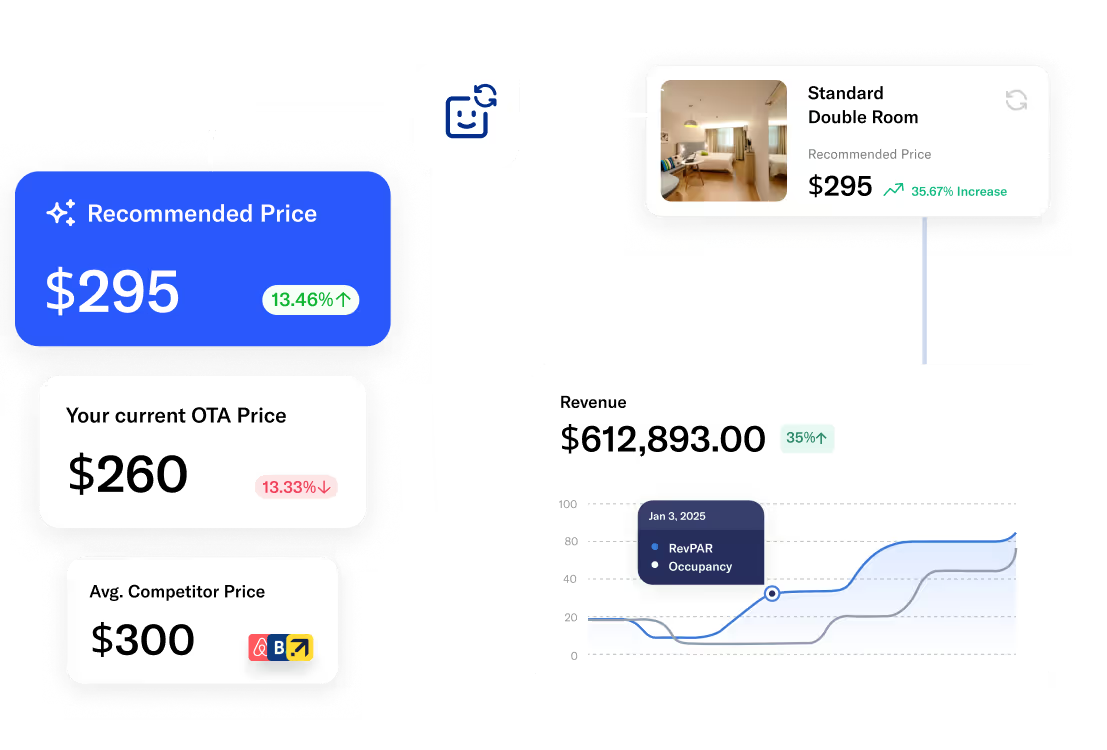
roommaster Revenue Management gives owners that comparison directly, rather than waiting for a year-end summary to find out whether the investment worked. Properties using AI-powered revenue management have seen RevPAR increases of up to 35%, though the numbers only confirm what a renovation achieved. Setting the comparison window before construction starts, not after, keeps the evaluation honest rather than convenient.
See how roommaster Revenue Management tracks performance before and after a renovation, or book a demo to see it on your own property.
{{cta-strip}}
Frequently Asked Questions
1. What is a hotel renovation?
A hotel renovation is the planned work of updating a property to fix wear, meet brand standards, and improve the guest experience.
2. How often should a hotel be renovated?
Refresh guest rooms every 3 to 5 years, and plan a major renovation covering systems like plumbing and HVAC every 7 to 10 years.
3. How do you budget for a hotel renovation?
Build in 10 to 20% contingency beyond the contractor's quote, and budget for lost revenue while rooms are offline.
4. How do you fund a hotel renovation?
Combine reserve funds with a commercial or SBA-backed loan, and time the draw against the low season so payments start before full occupancy returns.
5. How much revenue can you expect to lose during a renovation?
Phasing work floor by floor and repricing the remaining inventory limits revenue loss far more than closing the whole property at once.
6. How do you measure if a renovation paid off?
Compare RevPAR year over year for the same months, not just a single post-renovation snapshot.
7. Should you renovate one area at a time or all at once?
Focus fully on one area before starting the next, since a shallow refresh across everything is less noticeable than depth in one place.
.png)
.png)
.png)