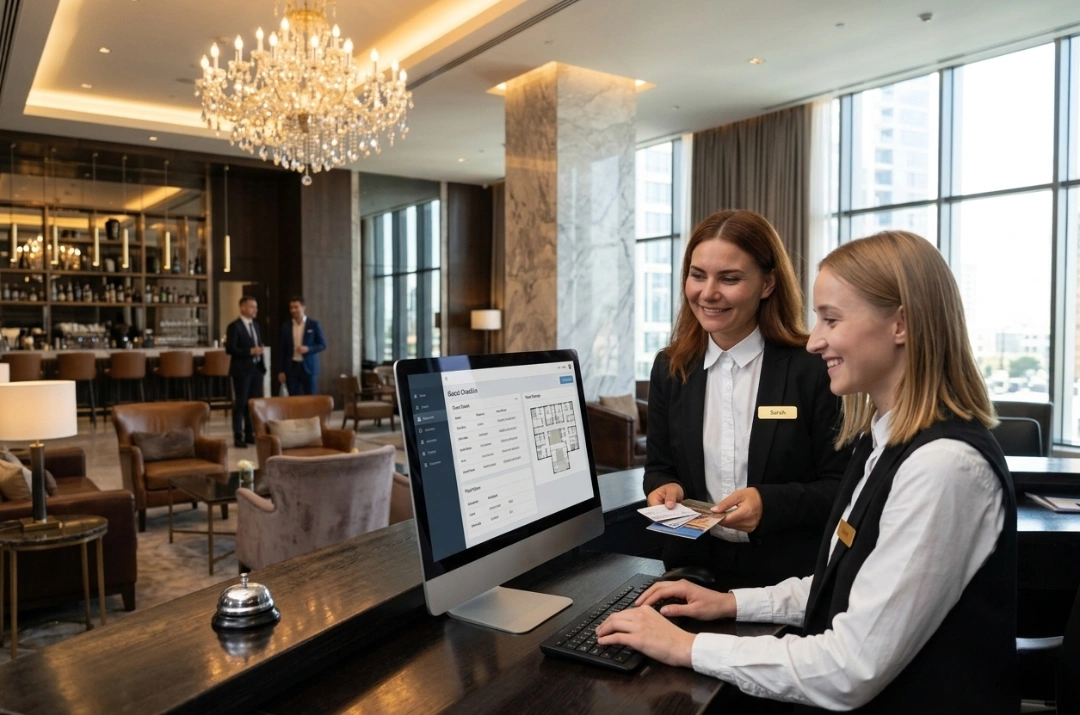
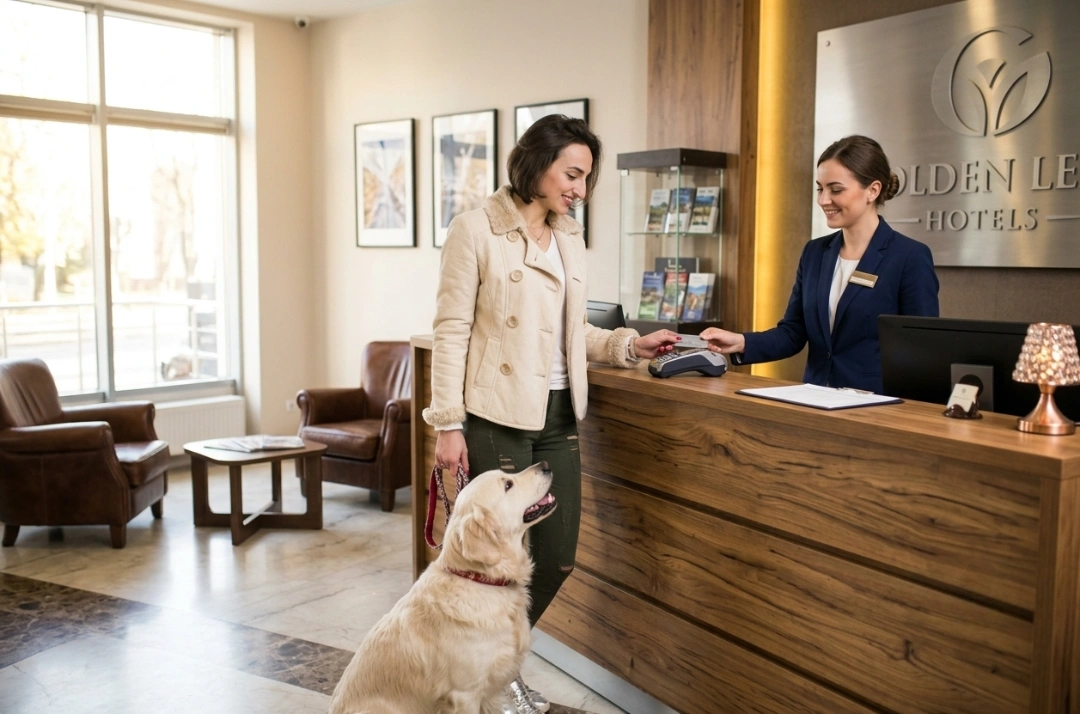
Hotel online reputation management is the ongoing practice of monitoring, responding to, and improving what guests say about your property across review sites, OTAs, search, and social, because those signals decide whether a traveler books you or the hotel next door. It matters most for independent and boutique hotels, where a handful of recent reviews can move your ranking and your rate.
{{pms-one}}
What is hotel online reputation management?
Hotel online reputation management is the coordinated work of watching, answering, and steering guest sentiment wherever it appears online. It combines four repeatable habits: monitoring reviews, responding to them, generating new ones from satisfied guests, and reading the patterns to fix operations. It is a workflow, not a one-time cleanup.
The scope is wider than most hoteliers expect. Your reputation is shaped by Google Business Profile, review platforms, OTA listings, metasearch, and social posts, plus the online reviews for hotels that guests leave without being asked. A single guide, done well, keeps all of these consistent instead of scattered.
Why does online reputation matter for hotels?
Online reputation matters because it converts directly into bookings and rate. Travelers usually compare two or three properties in the same price band, and the one with more recent, higher-rated, well-answered reviews wins the reservation, often at a higher price.
Consider a worked example. A 40-room boutique running 72% occupancy at a $180 average daily rate sells about 29 rooms a night, for roughly $5,184 in daily rooms revenue. If a stronger review profile lets it hold rate $8 higher without losing occupancy, that is about $230 more per day, close to $84,000 a year, from the same rooms. Reputation is a revenue lever, not a vanity score.
The reverse is also true. A visible slide from 4.5 to 4.1 stars, or a run of unanswered complaints, quietly pushes you down OTA sort order and out of a traveler's shortlist. Reliable review data pulled from your property management system and guest records helps you spot that slide early.
{{pms-two}}
Which review sites matter most for hotels?
The sites that matter most are the ones your specific guests actually read before booking, which for most hotels means Google, Tripadvisor, and the OTAs you sell through. Each platform drives a different decision and rewards a different response habit.
| Platform |
What it drives |
How to respond |
| Google Business Profile |
Local search visibility and map-pack clicks |
Reply to every review; keep hours, photos, and amenities current |
| Tripadvisor |
Discovery and destination shortlisting |
Respond publicly; use Management Center to flag policy breaches |
| Booking.com |
On-platform sort order and conversion |
Reply in-console; scores here feed your OTA ranking |
| Expedia |
Metasearch and package visibility |
Answer through the partner portal; watch category sub-scores |
| Social (Instagram, TikTok, Facebook) |
Reach and brand perception |
Engage in comments and DMs; repost tagged guest content |
You do not need equal effort everywhere. Rank your platforms by booking volume, then spend the most attention where the most reservations start. Keeping your direct channel healthy through a hotel booking engine also reduces how much any single OTA's score dictates your business.
{{booking-engine-one}}
How should hotels respond to negative reviews?
Respond to every negative review promptly, specifically, and without defensiveness, ideally within 24 to 48 hours. A calm, concrete reply is written less for the reviewer and more for the hundreds of future guests reading it. The goal is to show that feedback leads to a real fix.
Use a consistent framework so replies stay professional under pressure:
| Step |
What to do |
Boutique example line |
| Acknowledge |
Name the guest and the specific issue |
"Thank you, Maria. You are right that check-in took too long on Friday." |
| Apologize |
Own it plainly, no "if" |
"We are sorry the wait affected the start of your stay." |
| Act |
State the concrete change |
"We have added a second front-desk host for weekend arrivals." |
| Advance |
Move detail off the public thread |
"Please email the front office manager so we can make this right." |
Watch the pattern, not just the post. If three reviews in a month mention slow check-in, the fix is an operational one, not a wording one. That is where turning negative hotel reviews into changes on the floor separates hotels that improve from hotels that just apologize.
Worked example: a boutique turns a rating slide around. The 40-room Ferry House Inn drifts from 4.5 to 4.1 stars over a quarter. Reading the reviews, the manager sees the same theme in five of them: long Friday check-in waits.
Three actions follow: a public reply to each review naming the fix, a second front-desk host added for weekend arrivals, and a post-stay survey to catch friction before it reaches Google. Over the next quarter the Friday complaints stop, new five-star reviews outnumber the old ones, and the rating recovers to 4.4. At a $180 average daily rate and 72% occupancy, holding rate $8 higher on the stronger profile adds about $230 a day. The lesson: the review score moved because the operation changed, not because the replies were clever.
See how roommaster supports the guest experience behind better reviews. Book a demo.
How can hotels get more positive reviews?
Hotels get more positive reviews by asking happy guests at the right moment, automatically and consistently. The strongest review profiles are not luck; they come from a post-stay prompt sent to the right guests soon after checkout, while the experience is fresh.
A practical solicitation loop:
- Time it: trigger a message a few hours to a day after checkout, not a week later.
- Segment it: prompt guests who signaled satisfaction, and route unhappy ones to a private guest satisfaction survey instead of a public site.
- Make it easy: link straight to your Google or Tripadvisor review form so it is one tap.
- Never gate it: ask all eligible guests, not only those who promise five stars, since incentivized or filtered reviews violate platform rules.
Catching a frustrated guest before they post is the quiet half of solicitation. A short in-stay check-in through your guest app can turn a would-be one-star into a fixed problem and a private note.
How does managing Google reviews differ from OTA reviews?
Google reviews and OTA reviews differ in who can post and how much control you have. Anyone can leave a Google review whether or not they stayed, so volume is high and moderation is limited to policy flags. OTA reviews like Booking.com and Expedia are tied to a verified stay, so they carry booking weight but arrive only from real guests.
That changes your tactics. On Google you focus on volume, recency, and complete listing details that feed local search. On OTAs you focus on category sub-scores such as cleanliness and staff, because those numbers directly move your sort position and conversion inside the platform. Treat them as two jobs sharing one calendar.
What tools and features help manage hotel reputation?
The tools that help most are a review aggregation dashboard, response templates, sentiment analysis, and automated post-stay messaging, connected to the systems that run the stay itself. Reputation software consolidates reviews into one view so a lean team is not logging into six platforms a day.
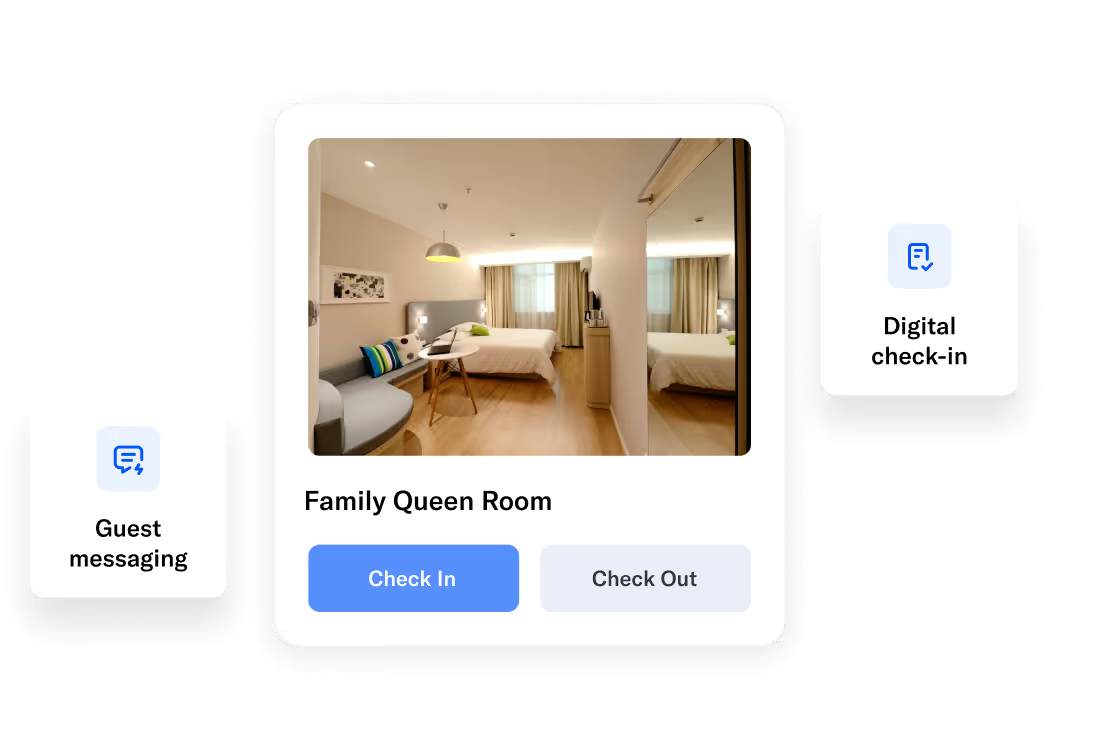
Here is the honest picture of where roommaster fits. roommaster is not a standalone review-aggregation product; it is the property management system and guest layer that shapes the stay a review is written about. Its hotel guest app and AI concierge handle in-stay requests and messaging, and its guest satisfaction surveys capture feedback before it turns into a public rating.
Dedicated review-aggregation and advocacy tools connect through the roommaster integrations marketplace rather than living inside the PMS.
For a boutique team, that split is the point. Fix the operational cause of reviews inside the PMS, capture private feedback with surveys and messaging, then let a connected reputation tool handle public aggregation and reporting.
{{guest-app}}
How do you measure online reputation success?
Measure success with a small set of numbers you can actually move: average rating, response rate, response time, review velocity, and a guest-experience score such as NPS or CSAT. Chasing a perfect star average is the wrong target; trends and habits tell you more than any single figure.
| Metric |
What it tells you |
Sensible focus |
| Average rating (by platform) |
Overall standing where guests book |
Watch the trend line, not the decimal |
| Response rate |
Whether you reply to everyone |
Aim for every review, negative first |
| Response time |
How proactive you look |
A day or two, consistently |
| Review velocity |
Freshness and recency |
A steady flow beats an old spike |
| NPS or CSAT |
Private sentiment before it goes public |
Rising alongside your public scores |
Close the loop by routing what these numbers reveal to the people who can act. Pairing review trends with guest feedback analysis from surveys and messaging turns reputation from a scoreboard into an operations tool that fixes the same complaint once instead of apologizing for it every week.
Ready to build the guest experience that earns better reviews? See roommaster in action and book a demo.
{{cta-strip}}
FAQs
1. What is hotel online reputation management?
It is the ongoing practice of monitoring, responding to, and improving guest reviews and sentiment across Google, Tripadvisor, OTAs, and social, so travelers choose your hotel over comparable options.
2. How quickly should a hotel respond to a bad review?
Aim for 24 to 48 hours. A prompt, specific, non-defensive reply reassures future readers far more than the reviewer, and it shows that feedback leads to a real change.
3. Which review sites should a hotel prioritize?
Prioritize by booking volume. For most properties that means Google Business Profile, Tripadvisor, and the OTAs you sell through, with social handled as reach and brand engagement.
4. Can hotels ask guests for reviews?
Yes, and you should. Send an automated post-stay prompt to all eligible guests. Do not gate requests to only happy guests or offer incentives, since that breaks platform rules.
5. Do OTA reviews matter more than Google reviews?
They matter differently. OTA reviews come from verified stays and move on-platform sort order, while Google reviews build local search visibility and volume. Both belong in the workflow.
6. Does roommaster include review management software?
roommaster is a PMS with a guest app, AI concierge, and satisfaction surveys that shape and capture guest feedback. Dedicated review-aggregation tools connect through its integrations marketplace.
7. How do you measure reputation success?
Track average rating trend, response rate, response time, review velocity, and an NPS or CSAT score. Habits and trends signal progress better than any single star average.


.png)
.png)
.png)