Hospitality Phishing Attacks Are Rising: How Hotels Can Protect Their Systems And Their Guests
"We’ve trusted roommaster for over 25 years. It keeps our entire hotel group running smoothly with everything we need in one easy-to-use system" - Jorge Venegas, General Manager, NUVO Suites
Phishing attacks on hotel PMS, channel managers, and OTA accounts are rising sharply across the industry.
Attackers steal staff logins, pull real guest reservation data, then scam guests under your hotel's branding.
Enable MFA on every account that supports it, including shared and long-tenured logins.
Always log in through bookmarks, never search results or email links.
Train staff to slow down on urgent emails and report anything that feels off.
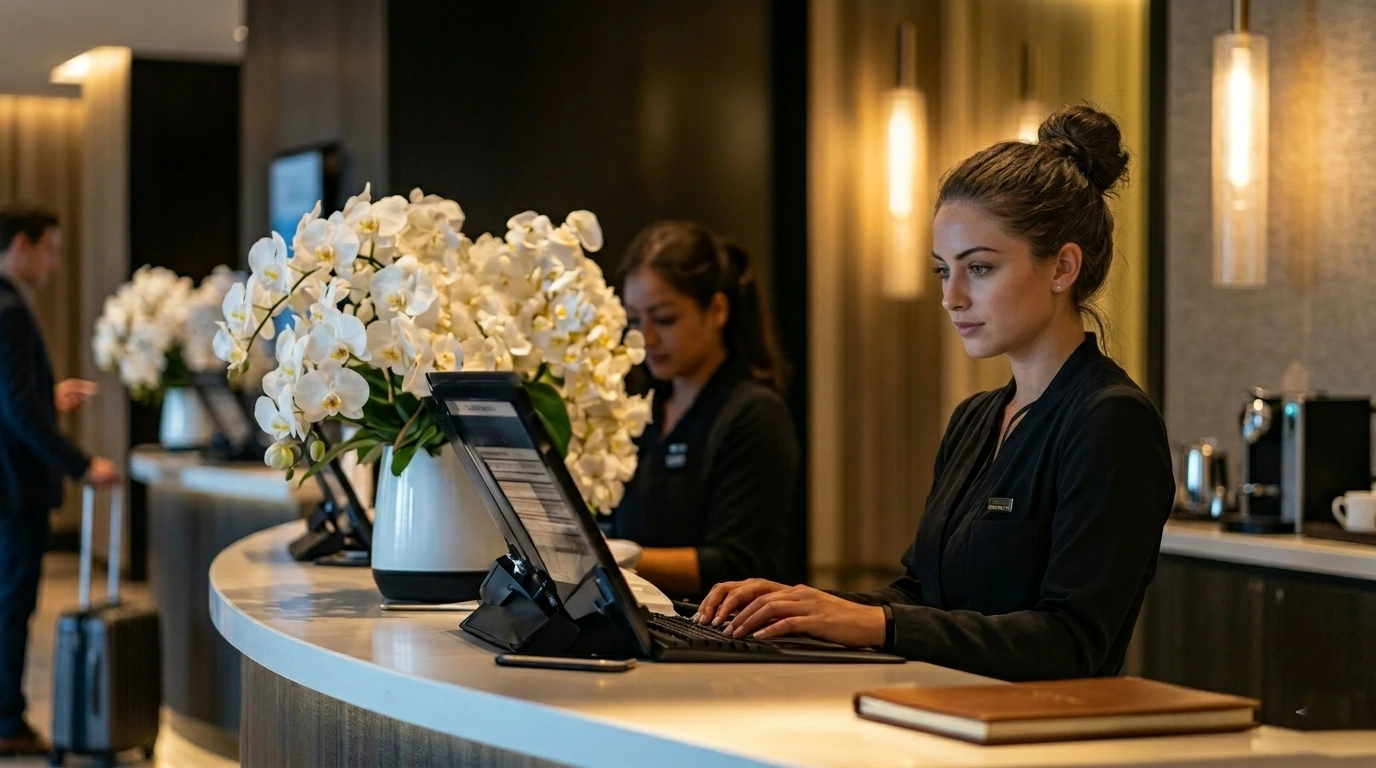
The hospitality industry is in the middle of a sharp uptick in phishing activity. Hotel property management systems, booking channels, and front desk inboxes have become primary targets for organized credential theft — and the consequences reach far beyond a single compromised account.
When attackers get in, they don't just steal logins. They steal trust. They use stolen access to pull guest reservation data, then turn around and run convincing scams against those guests under the hotel's own brand.
This is not a far-off threat. It is happening right now, across PMS platforms, channel managers, and OTA extranets, to hotels of every size. Here is what is going on, why hotels are being targeted, and the specific steps every property should take to protect their systems and their guests.
What's actually happening
The pattern is consistent across the industry, and it usually unfolds in four stages.
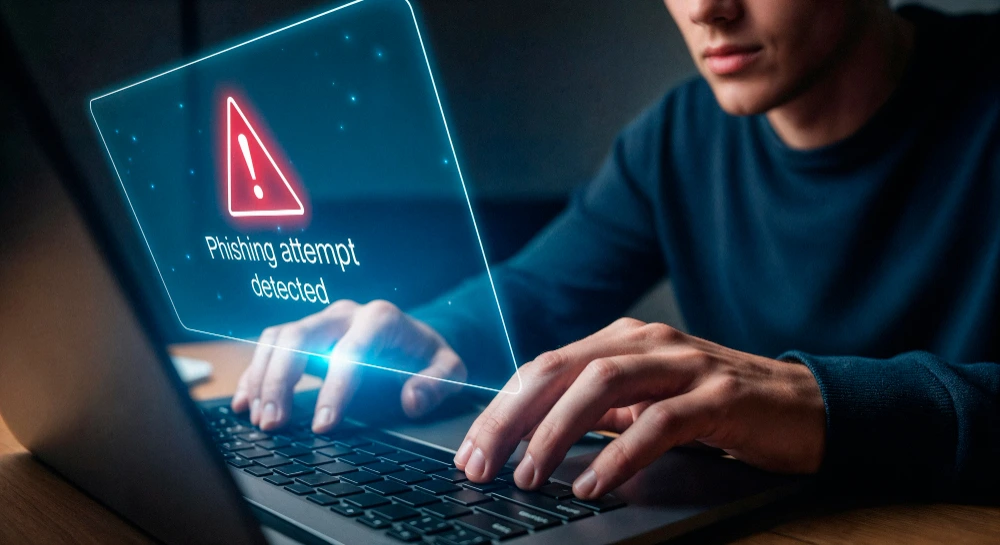
Stage 1: The phishing email
A staff member receives an email that looks legitimate — often impersonating an OTA, the hotel's own PMS provider, a payment processor, or an internal system. The email creates urgency: a failed payment, an imminent cancellation, a password reset, a reservation that needs immediate attention.
Stage 2: The fake login page
The email links to a login page that is a near-perfect copy of the real one. Attackers buy similar-looking domains and even run Google ads to push these fake login pages to the top of search results. A tired front desk agent on a busy shift sees the expected logo, the expected colors, and the expected layout — and enters their credentials.
Stage 3: The account takeover
Those credentials go straight to the attacker. They log into the real system, often through what security teams call an adversary-in-the-middle setup, and depending on how the session is captured, they may be able to bypass standard one-time password MFA as well. From inside the account, they download future guest lists, contact details, reservation values, and arrival dates.
Stage 4: The guest scam
Now armed with real reservation data, attackers contact guests directly. The most common play right now is a "free upgrade" or "payment failed" email that mirrors the hotel's actual branding, fonts, and website style. The guest receives a message that references their real booking dates, real room type, and real confirmation number — and is asked to "verify" their credit card to secure the upgrade or complete payment. The card data goes directly to the attacker.
By the time the hotel notices, the damage is done. Guest data is exposed, payment cards are compromised, and the property's reputation is on the line for fraud that originated from a single phished password.
Why hotels are such an attractive target
There are a few reasons hospitality has become a focus area for credential phishing groups.
Hotels hold an unusual concentration of high-value data — names, contact information, travel dates, passport numbers, payment cards, loyalty memberships, and corporate booking patterns. That data has a clear resale market and an even clearer fraud value.
The workforce is also operationally difficult to defend. Front desk teams handle a high volume of guest emails, OTA notifications, vendor communications, and internal system alerts every day. They are trained to act quickly, and seasonal turnover means new staff are continually being onboarded. That combination is exactly what social engineering relies on.
And finally, the industry runs on interconnected systems. A single compromised PMS login can give an attacker visibility into the channel manager, the booking engine, payment data, and historical guest information all at once.
What every hotel should do right now
The good news is that the most effective defenses are not expensive or technical. They come down to discipline, awareness, and a few specific operational habits.
1. Enable multi-factor authentication on every account that supports it
If your PMS, channel manager, OTA extranets, email accounts, and payment portals offer MFA, turn it on for every user — not just admins. MFA dramatically raises the bar for attackers, because a stolen password alone is no longer enough.
Make MFA mandatory at the user level, and review the list of who has it enabled at least quarterly. The accounts most often left without MFA tend to belong to long-tenured staff or shared mailboxes, which is exactly where attackers focus.
2. Always log in through bookmarks, never search results
This is the single most important behavior change for front desk and reservation staff.
Attackers are buying Google ads and registering look-alike domains specifically to catch people who search for "PMS login" or "[brand] login" and click the first result. Once your team is in the habit of typing a brand name into Google to find a login page, it is only a matter of time before someone lands on a fake one.
Bookmark every official login URL — for your PMS, channel manager, booking engine, payments platform, email, and OTA extranets. Train staff to always launch logins from those bookmarks, not from emails, search engines, or messaging apps.
3. Train staff to recognize the patterns of a phishing attempt
Most phishing emails share the same tells once you know what to look for:
A sense of urgency — payment failures, cancellations, account suspensions, "verify within 24 hours"
A sender address that is close but not exact, often using subtle character swaps
A link whose visible text does not match the actual destination when hovered
Requests to log in, share credentials, or enter payment details that the system would never legitimately ask for
Unexpected attachments or password-protected files
Unusual phrasing, tone, or signoffs from someone you know
Build a simple internal reporting culture. If something feels off, it should be escalated immediately — no judgment, no second-guessing. Most of the worst breaches in this industry started with a staff member who had a bad feeling and did not feel comfortable raising it.
4. Use strong, unique passwords for every system
Password reuse is one of the most reliable paths into a hotel's stack. When the same password is used across email, PMS, and the OTA extranet, a single leak elsewhere on the internet can hand attackers the keys to all of it.
Use long, unique passwords for every account, and use a reputable password manager so staff are not writing passwords down or reusing them out of convenience. Disable shared logins like front-desk@hotel.com for any critical system — assign individual accounts with role-based access instead. That way, if something goes wrong, you can see exactly which account was compromised and shut it down without locking everyone out.
5. Keep software, browsers, and devices up to date
Outdated browsers, operating systems, and antivirus tools are exploited by phishing kits all the time. Make sure every workstation behind the front desk, in back-of-house, and at home (for remote managers) runs current versions of its operating system, browser, and endpoint protection.
If your property uses a corporate IT team, ask them to verify that automatic updates are enabled and patches are being applied. If you don't have an IT team, this is one area where investing in managed services pays for itself many times over.
6. Be very careful about who gets access — and who keeps it
Review your PMS, channel manager, and email user lists regularly. Deactivate accounts for staff who have left. Audit role-based access so that staff only see what they actually need to do their job. The smaller the attack surface, the smaller the potential damage when something does go wrong.
7. Have a plan for what happens if you're compromised
Backups are not glamorous, but they are what stand between a contained incident and a catastrophe. Make sure critical data is backed up regularly and that you have actually tested recovery — not just assumed it works.
Have a written incident response plan that names who to call, what to disable, and how to notify guests if their data is exposed. The middle of a breach is the worst possible time to figure out a process.
Where roommaster stands
Security is not a side project at roommaster. It is part of how the platform is built and how we work with every property on the system.
roommaster operates on a hardened, enterprise-grade cloud infrastructure with encrypted data transmission, role-based access controls, continuous monitoring, and security practices aligned with PCI and GDPR standards. We support MFA, we maintain centralized authentication, and we run regular security updates so that hotels do not have to think about patching the platform themselves.
But security is genuinely a shared responsibility. The most technically secure platform in the world can still be undermined by a single staff member entering credentials on a fake login page. That is why we are actively reaching out to every roommaster customer to reinforce safe login practices and to make sure everyone on your team knows exactly which URLs are legitimate.
This page lists every authorized roommaster login URL, common threats to watch for, and the specific steps your team should take if anything looks suspicious.
Only log in through the official URLs published on that page. If you ever land on a login screen that uses roommaster branding but a different web address — even one that looks almost identical — stop, do not enter your credentials, and contact roommaster Support at support@roommaster.com to verify.
We would rather answer a hundred "is this real?" questions than have a single property compromised because someone wasn't sure.
A closing thought
Phishing is not a technology problem. It is a human problem dressed up in technology, and the hotels that handle it best are the ones that treat awareness, habits, and culture as seriously as they treat their PMS configuration.
Bookmark your logins. Turn on MFA. Train your team to slow down when an email feels urgent. Review who has access. And when in doubt, ask.
Your guests trust you with some of the most sensitive information they share with any business. Protecting that trust is what hospitality is built on — and it is what we are here to help you do.
If you have questions about roommaster security, or you want to report something suspicious, contact us anytime at support@roommaster.com.
roommaster is the unified hospitality platform built by hoteliers, for hoteliers. To learn more about how roommaster helps independent hotels run smarter, safer operations, book a demo.
Mayela Lozano is a content strategist with a passion for hospitality and technology. She collaborates with roommaster on content creation, highlighting how technology can streamline hotel operations and enhance guest satisfaction. When she’s not creating content, Mayela loves to travel and spend time with her two little ones, discovering new adventures and making memories along the way.
Join Thousands of Hotels Thriving with roommaster
The transition to roommaster is straightforward and efficient. Our implementation team handles data migration including reservations, guest profiles, and historical information.
The transition to roommaster is straightforward and efficient. Our implementation team handles data migration including reservations, guest profiles, and historical information.
Hotel Check-In Kiosk: Enhance the Guest Experience
October 5, 2026
Hospitality Technology
Hotel Management
Hospitality Trends
Hotel Self Check-In: How It Works, Types, Benefits And Setup
October 1, 2026
Hotel Management
Hospitality Trends
Hotel Check-In & Check-Out Times Explained
October 1, 2026
Hospitality Trends
Hotel Management
Cloud-Based Property Management System: Hotel PMS
October 1, 2026
Hotel Management
Cloud PMS
Hotel Management System (HMS): A Complete Guide
September 23, 2026
Hospitality Trends
Hospitality Technology
Hotel PMS
Hotel Management
Cloud PMS
How Hotel PMS Software Transforms Hospitality Management
September 23, 2026
Hotel Management
Marketing
Pet-Friendly Hotel Amenities & Package Ideas That Drive Revenue
September 22, 2026
Hotel Management
Hotel PMS
Hotel Food And Beverage (F&B): The Complete Guide
September 22, 2026
Hotel Management
Marketing
Hotel Pet Fees: How Much Should You Charge?
September 22, 2026
Hotel Management
Hotel PMS
Best Hotel Food and Beverage (F&B) Management Software In 2026
September 22, 2026
Join Thousands of Hotels Thriving with roommaster
See how roommaster's unified platform can work for your property. Our team will walk you through features tailored to your specific needs and operations.

.png)
.png)
.png)