Looking for an Oracle OPERA alternative? Here are six cloud hotel PMS platforms worth comparing: 1. roommaster, 2. Stayntouch, 3. RMS Cloud, 4. Cloudbeds, 5. Mews and 6. Maestro PMS.
Each one fixes a different gap OPERA leaves open for a multi-property operator, from lighter licensing to faster onboarding.
This guide sorts them by multi-property depth, pricing model, group fit and migration realism, so you can right-size from heavy enterprise OPERA to an agile cloud system without losing central control.
{{pms-one}}
Why hotels look for Oracle OPERA alternatives
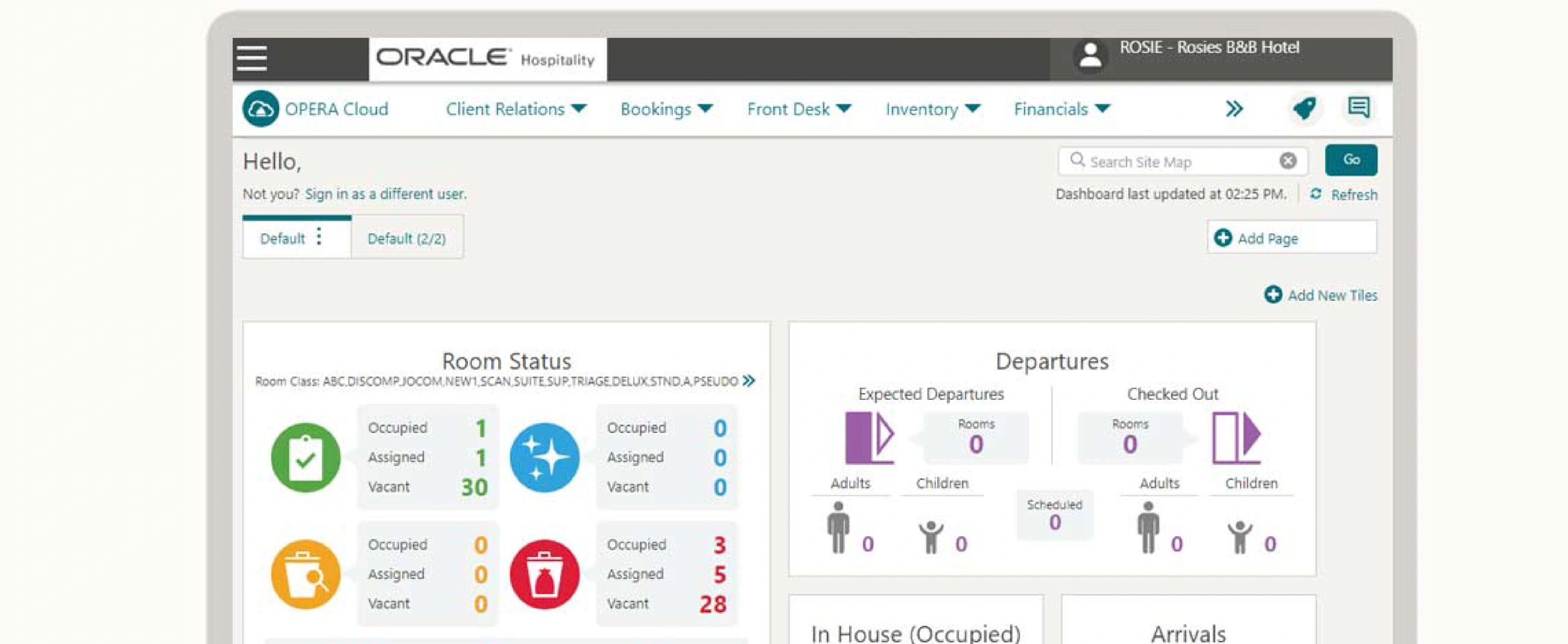
Oracle OPERA earned its place as the enterprise standard, with genuine depth for large chains through OHIP, brand-standard control, central reservations and a vast partner ecosystem. But the same weight that suits a global flag pushes many groups and over-provisioned independents to compare options at renewal or migration:
- Cost and licensing overhead: OPERA is priced for large enterprises, and the module, interface and licensing layers add up quickly for a mid-size group or an independent that adopted it for the brand halo and uses a fraction of it.
- Implementation complexity: OPERA deployments are known for long, consultant-heavy rollouts, so standing up a property takes months rather than weeks.
- OPERA Cloud migration disruption: operators moving off legacy OPERA or through the OHIP and OXI transition report real switching pain, from re-integrating interfaces to retraining.
- Slow, resource-heavy operation: the breadth that helps a 500-room flagship feels heavy at the front desk of a 60-room property, where staff want a lighter, faster system.
If any of those sound familiar, the six alternatives below map to the switch reasons multi-property operators cite most.
Comparing the 6 best Oracle OPERA alternatives
Pricing models below reflect each vendor's published or commonly cited approach as of July 2026. Ratings, where cited, come from G2 with review counts, since sample size matters when a score looks high or low. Every option here is cloud-capable, the first thing most OPERA switchers want.
| PMS |
Best for |
Pricing model |
Property/segment fit |
Standout capability |
| roommaster |
Groups right-sizing from OPERA |
Custom quote (contact sales) |
Independent, boutique, groups, motels, resorts |
Group bookings + cross-property reporting + 24/7 phone support |
| Stayntouch |
Mobile-first chains |
Custom quote, per room/property |
Mid-to-large groups and select-service chains |
Mobile-first cloud PMS with open APIs |
| RMS Cloud |
Mixed portfolios (parks, resorts) |
Custom quote, scales by modules |
Groups, parks, extended-stay, resorts |
Multi-property channel and rate management |
| Cloudbeds |
Smaller portfolios wanting all-in-one |
From ~$15 per room/month, per-property minimums |
Small to mid-size groups and independents |
PMS + channel manager + booking engine + payments in one bill |
| Mews |
Automation-first groups |
From ~$17 per room/month, marketplace apps extra |
Tech-forward multi-property and mid-size |
API-first automation and an open marketplace |
| Maestro PMS |
Luxury and resort groups |
Custom quote, cloud or on-premise |
Independent luxury hotels and resorts |
Deep property-level configuration, deployment choice |
A pricing model tells you more than a single number. roommaster, Stayntouch, RMS Cloud and Maestro quote per portfolio, Cloudbeds and Mews scale with room count, and OPERA layers modules and interface fees, so a sticker-rate comparison will mislead a group buyer. The right question is total cost across every property, including migration and support.
A worked cost example: what the booking engine saves a group
Software price is only part of the math. For a hotel group, the larger recurring line is OTA commission. Take four properties averaging 60 rooms each, 72% occupancy, a $160 average daily rate, with 35% of nights booked through OTAs at a 15% commission:
- Monthly OTA revenue routed through commissions: 240 rooms x 0.72 x 30 nights x $160 x 0.35 = roughly $232,000.
- OTA commission at 15%: about $34,800 per month across the group.
Shifting even a tenth of those bookings to a commission-free booking engine saves close to $3,480 a month, which usually exceeds the PMS subscription. A native direct-booking channel across every property, not a low per-room rate, should anchor a group comparison.
{{booking-engine-one}}
How we chose these Oracle OPERA alternatives
This list is built for hotel groups and multi-property operators evaluating an OPERA replacement, plus independents that over-bought enterprise software. Four criteria shaped it:
- Multi-property fit: every tool supports central reservations, cross-property reporting or group workflows, the capabilities that make OPERA hard to leave. See the best PMS for hotel groups.
- Cloud and migration realism: priority went to systems with genuine cloud deployment, clear onboarding and data-export terms, since migration disruption is the biggest switch fear.
- Transparent evaluation: pricing models and public G2 or Capterra ratings with review counts, not marketing claims. Compare each against the wider field of best hotel management software.
- Right-sized depth: enterprise-grade control without enterprise-grade overhead, so a mid-size group is not paying for a global chain's feature set.
Top 6 Oracle OPERA alternatives
1. roommaster (best for groups right-sizing from OPERA)
Best for: hotel groups and multi-property operators that want central reservations, group bookings and cross-property reporting in one cloud platform without enterprise overhead.
roommaster (formerly innQuest) is a cloud hotel property management system that pairs front-desk and reservation workflows with a commission-free booking engine, a channel manager, revenue management, group tools and multi-property reporting. roommaster has run hotel software for more than 25 years, with offices in the US, Canada, UK and Australia.
Key features:
- Front desk, reservations, housekeeping and night audit in one cloud PMS, so every property runs off a single record
- Channel manager with real-time OTA sync across Booking.com, Expedia, Airbnb, Vrbo and Agoda to cut overbooking risk
- Commission-free booking engine that turns each property's website into a zero-fee channel
- Built-in revenue management that adjusts rates automatically off demand, occupancy and competitor signals
- Group and block-booking tools plus multi-property reporting for a single portfolio view
- AI concierge, AI guest management and a guest app with mobile check-in and digital keys
- Integrated payments and 100-plus integrations (accounting, POS, door locks)
Pros:
- Group and block bookings and cross-property reporting are native, so a growing portfolio keeps the central control that holds operators on OPERA, without the licensing weight.
- 24/7 support by phone, chat and email, staffed from US, Canada, UK and Australia offices, means a front desk locked out at 2am reaches a human, which shortens the migration risk period after cutover.
- The commission-free booking engine attacks OTA commission, the biggest recurring cost line across a portfolio, so the platform can pay for itself in shifted bookings. One platform covers PMS, distribution, revenue and guest apps, removing the interface sprawl that makes OPERA expensive at mid-size scale.
Cons:
- Pricing is quote-based rather than published, so a group needs a short sales conversation to benchmark it against per-room-priced rivals like Cloudbeds or Mews.
- roommaster does not carry the brand-standard enforcement depth a large global flag relies on OPERA for, so a chain bound to a franchisor mandate may have less room to switch.
- As a broad platform, some back-office screens are denser than a stripped-back mobile-first rival, so staff used to a minimalist app face a learning curve.
Verdict: the strongest fit for a group that wants OPERA-style central control in a lighter, faster cloud system with real support.
{{pms-two}}
2. Stayntouch (best for mobile-first chains)
Best for: mid-to-large hotel groups and select-service chains that want a modern, mobile-first guest and staff experience with multi-property support.
Stayntouch is a mobile-first cloud PMS that runs front-desk and guest workflows from a tablet or phone, with open APIs and multi-property capability. It holds a G2 rating of about 4.4 out of 5 across roughly 67 reviews as of July 2026, and is a frequent OPERA alternative for chains modernizing the guest journey.
Key features:
- Mobile-first PMS that runs check-in, checkout and housekeeping from a handheld
- Guest-facing mobile check-in, digital registration and self-service kiosk
- Open API for connecting distribution, payments and guest-experience tools
- Multi-property configuration, central profiles and revenue tooling via partners such as IDeaS
Pros:
- The mobile-first design lets staff serve guests anywhere in the property, which suits select-service and lifestyle chains modernizing away from OPERA's desk-bound workflows.
- Guest-facing check-in and kiosk options lift the arrival experience without a separate guest-app vendor.
- Open APIs make it straightforward for a group with a tech team to integrate preferred distribution and payment tools.
Cons:
- Pricing is quote-based and oriented to mid-to-large properties, so a very small independent may find the cost beyond its needs.
- The mobile-first model is a real shift for teams used to a desktop PMS, so change management across properties needs planning.
- Back-office and reporting depth can trail heavier enterprise systems, so a group that relied on OPERA's granular reporting should test it first. See other stayntouch alternatives if desktop depth matters.
Verdict: a strong choice for a chain modernizing the guest and staff experience on mobile while keeping multi-property control.
3. RMS Cloud (best for mixed portfolios)
Best for: groups running mixed portfolios that include parks, extended-stay, resorts or serviced apartments alongside hotels.
RMS Cloud is a multi-property PMS with deep channel management, rate tools and reservation handling across varied asset types, a practical OPERA alternative when your portfolio is not just hotels.
Key features:
- Multi-property PMS that manages hotels, parks, resorts and extended-stay in one system
- Built-in channel manager and rate management across OTAs
- Reservation, housekeeping and reporting scaled for portfolios
- Online booking, dynamic pricing and integrations for payments and POS
Pros:
- The system handles diverse property types in one platform, which suits a group mixing hotels with parks, cabins or extended-stay units that OPERA is not built around.
- Built-in channel and rate management keep distribution consistent across every property without stitching separate tools.
- A long track record with multi-property operators means the reporting and central workflows are genuinely portfolio-scale.
Cons:
- The breadth and configurability bring a learning curve, so onboarding across a portfolio takes planning and support.
- The interface is functional rather than mobile-first, so staff expecting a minimalist app may find it dense.
- Support and integration experience can vary by region and asset type, so confirm coverage for your mix. Compare other rms cloud alternatives if your portfolio is hotel-only.
Verdict: the pick when your portfolio spans more than hotels and needs one system for every asset type.
4. Cloudbeds (best for smaller portfolios wanting all-in-one)
Best for: small to mid-size hotel groups that want PMS, channel manager, booking engine and payments on a single bill.
Cloudbeds is an award-winning hospitality platform that consolidates the distribution stack, so inventory, rates and payments live in one subscription. It rates well for user-friendliness and appears on most OPERA alternatives directories.
Key features:
- Unified PMS, Cloudbeds channel manager and booking engine under one login
- Cloudbeds Payments built in, so card processing lives inside the platform
- Broad OTA and metasearch connectivity through the Cloudbeds marketplace
- Insights reporting, a revenue add-on and group management across locations
Pros:
- Combining PMS, channel manager, booking engine and payments in one platform removes the interface sprawl that makes OPERA heavy for a smaller group.
- Its wide OTA and metasearch reach helps every property fill rooms without negotiating separate distribution contracts.
- The interface scores well for user-friendliness, so onboarding non-technical front desks is usually quicker than an OPERA rollout.
Cons:
- Pricing rises as you add rooms and modules, so a larger group can see the per-room math climb past the headline entry rate, a point reviewers raise on renewal.
- Multi-property reporting and deep customization can feel constrained next to enterprise tools, so a group used to OPERA's depth may hit ceilings on complex workflows.
- Support response times draw mixed feedback at busy periods, which matters when an error spans several properties. Weigh other cloudbeds alternatives and the cloudbeds vs oracle opera breakdown first.
Verdict: a strong all-in-one default for a smaller portfolio that values one vendor and invoice over enterprise-grade central control.
5. Mews (best for automation-first groups)
Best for: tech-forward multi-property and mid-size groups that prioritize automation and an open marketplace.
Mews is an API-first, mobile-first PMS known for a clean interface and one of the largest integration marketplaces in hotel tech. It is a most-cited OPERA alternative, and its automation appeals to groups cutting manual front-desk work.
Key features:
- Mobile-first PMS that automates check-in, housekeeping updates and night audit
- Open API and an extensive marketplace for building a custom stack
- Mews Payments with automated billing and guest self-service check-in
- Revenue-management and analytics tooling, plus multi-property support
Pros:
- Heavy automation of routine front-desk work frees lean central teams to run more properties without adding headcount, the efficiency a group chases when it leaves OPERA.
- The open marketplace lets a group assemble a best-of-breed stack from preferred payment, upselling or messaging tools.
- The modern, clean interface earns high ease-of-use scores, so tech-comfortable staff ramp fast after an OPERA migration.
Cons:
- Premium pricing plus a learning curve on advanced workflows can be steep, and the total climbs as you add marketplace apps that each carry a fee.
- The best-of-breed model means a group may manage several vendors and invoices rather than one, the opposite of the consolidation many OPERA switchers want.
- Phone support is more limited than the always-on desks some rivals staff, so urgent overnight issues can lean on email or chat. Review other mews alternatives and the mews vs oracle opera comparison if support matters.
Verdict: the pick when a modern, automated interface and an open marketplace outrank a single-vendor bill.
6. Maestro PMS (best for luxury and resort groups)
Best for: independent luxury hotels and resort groups that want deep property-level configuration and a choice of cloud or on-premise deployment.
Maestro PMS is an established platform for independent full-service hotels and resorts, offered cloud-hosted or on-premise. It holds a G2 rating of about 3.3 out of 5 across roughly 13 reviews as of July 2026, a small sample.
Key features:
- Full-service PMS with front desk, reservations, POS, spa and activities modules
- Choice of cloud-hosted or on-premise deployment
- Deep property-level configuration for complex operations
- Booking engine, channel connectivity, loyalty and analytics
Pros:
- Deployment choice between cloud and on-premise gives a luxury group control over data residency, which OPERA switchers with strict IT requirements sometimes need.
- Deep configuration and full-service modules (spa, activities, dining) suit resorts and luxury properties with operations beyond a front desk.
- A long focus on independent full-service hotels means it understands complex, high-touch operations.
Cons:
- The G2 sample is small and the score modest, and reviewers note the interface can feel dated next to cloud-native rivals, so test it first.
- On-premise deployment carries its own maintenance and update burden, partly reintroducing the infrastructure overhead a group may be leaving OPERA to escape.
- Onboarding a highly configurable system across a group takes time and vendor involvement, so factor implementation into the migration plan.
Verdict: a fit for a luxury or resort group that values deep configuration and deployment choice over a lightweight, mobile-first experience.
How to choose between Oracle OPERA and these alternatives
Use the switch reason, not the feature list, to narrow the field. Borrow the questions any PMS demo should answer:
- Is the channel manager and booking engine included, or an add-on? All-in-one billing favors roommaster and Cloudbeds; Mews and RMS Cloud vary by module.
- Do you need enterprise-grade central reporting? That points to roommaster or RMS Cloud; a smaller portfolio is well served by Cloudbeds.
- How mobile-first does your operation need to be? Stayntouch and Mews lead there; roommaster balances a modern cloud experience with all-in-one depth.
- Does your portfolio span more than hotels? RMS Cloud handles parks and extended-stay; Maestro suits full-service luxury and resorts.
- What are support hours, migration fees and data-export terms? Confirm these in writing, since migrations fail on implementation more often than on features.
Match against portfolio size and mix too, using the picker below:
| Your situation |
Strongest picks |
| Over-bought independent right-sizing from OPERA |
roommaster, Cloudbeds |
| Mid-size group wanting central control |
roommaster, Stayntouch, RMS Cloud |
| Portfolio spanning parks, resorts or extended-stay |
RMS Cloud, roommaster |
| Luxury or resort group needing deep configuration |
Maestro, roommaster |
| Mobile-first modernization priority |
Stayntouch, Mews |
{{pms-three}}
Why roommaster is a strong Oracle OPERA alternative
For teams leaving Oracle OPERA specifically, roommaster closes the gaps that trigger the switch while keeping the central control that made OPERA hard to leave. A global flag bound to a franchisor mandate may not have room to move. But for a mid-size group or an over-provisioned independent, roommaster delivers the parts that matter without the overhead:
- Group bookings with cross-property reporting are native, so central staff keep a single portfolio view without OPERA's licensing weight.
- A commission-free booking engine attacks OTA commission, the biggest recurring cost line across a portfolio.
- 24/7 phone, chat and email support from US, Canada, UK and Australia offices covers overnight emergencies and shortens migration risk.
- A channel manager and built-in revenue management ship in the same platform, so distribution and pricing stay in sync.
- Faster, cloud-native onboarding avoids the consultant-heavy rollout that makes OPERA migration painful.
That said, if you run a large global chain that depends on OPERA's brand-standard enforcement and specific partner interfaces, or you need on-premise deployment, a platform like Maestro or a stay on OPERA may fit better, and roommaster's quote-based pricing means a sales conversation. For most groups right-sizing from enterprise software, the move from heavy licensing to one agile cloud platform that keeps central control is the practical win. The roommaster vs stayntouch breakdown helps you judge another modern option.
See how roommaster handles central reservations, distribution and group bookings across your portfolio. Book a demo and bring your OPERA quote to compare like for like.
Bottom line
Oracle OPERA still anchors plenty of large chains, and its enterprise depth and partner ecosystem are real. But if cost, complexity, migration disruption or enterprise scale you never use are pushing you to compare, the six alternatives here cover every switch reason for a group. A smaller portfolio on one bill fits Cloudbeds; a mixed portfolio fits RMS Cloud; a luxury resort group weighs Maestro. For a group that wants OPERA-style central control in a lighter, faster cloud platform with 24/7 support, roommaster is the most complete right-size. Shortlist two, run demos with your own occupancy and OTA numbers, and let total cost, not the sticker price, decide.
{{cta-strip}}
FAQs
1. What is the best Oracle OPERA alternative for hotel groups?
For a group that wants central reservations, group bookings and cross-property reporting without enterprise licensing overhead, roommaster is a strong fit. Cloudbeds suits smaller portfolios, while RMS Cloud fits mixed portfolios that include parks or extended-stay.
2. Why do hotels migrate away from Oracle OPERA?
The most cited reasons are cost and licensing overhead, complex consultant-heavy implementations, disruption during the OPERA Cloud and OHIP migration, and a system that feels heavy for mid-size properties. Many groups also over-bought enterprise scale they never use.
3. Are there cheaper alternatives to Oracle OPERA?
Most alternatives quote per portfolio, so comparison is quote-to-quote. Cloudbeds and Mews publish per-room entry rates that are lower than typical OPERA licensing, but confirm which modules and add-ons each quote includes before comparing totals.
4. Which Oracle OPERA alternative is best for a mixed portfolio?
RMS Cloud handles hotels, parks, resorts and extended-stay in one system, making it a practical fit for operators whose portfolio spans more than traditional hotels. roommaster suits hotel-focused groups wanting all-in-one depth and central reporting.
5. How hard is it to migrate from Oracle OPERA to a cloud PMS?
Migration difficulty depends on data export, interface re-integration and staff retraining, not features. Choose a vendor with clear data-export terms, real support hours and cloud-native onboarding, since implementation is where most OPERA switches succeed or fail.
6. What features should I look for in Oracle OPERA competitors?
Prioritize multi-property reporting, an included channel manager and booking engine, group-booking tools, cloud deployment, transparent pricing and clear data-export terms, so central control stays intact and a future switch stays low-risk.


.png)
.png)
.png)