How to Build a Holiday Hotel Package That Actually Sells
A holiday hotel package is a curated bundle that combines a hotel stay with extra amenities, meals, or event access for one fixed price, sold as a single item instead of separate purchases.
A holiday package bundles a room with transportation, food, event access, or on-site perks into one total price, not just a discounted rate.
Packages work because they hide the individual cost of the room, letting hotels discount without publicly dropping their retail rate.
Design packages around a specific guest segment (families, couples, solo travelers, groups) and price them against the full retail value of everything inside the bundle.
Promote through a dedicated landing page, segmented email, paid social, and local event partnerships, then measure success on margin and shoulder-date occupancy, not just booking volume.
What Is a Holiday Hotel Package?
A holiday hotel package bundles a room stay with additional travel components, meals, amenities, or event access for one total price. Travelers buy it as a single item instead of booking each piece separately, which usually works out cheaper and simpler during a specific holiday, long weekend, or festival season.
Core components of a package typically include:
Transportation: Round-trip flights, train tickets, or a rental car.
Food and beverage: Daily breakfast, a festive multi-course dinner, or bar credits.
Event access: Tickets to a nearby festival, concert, theme park, or theater show.
On-site perks: Spa treatments, valet parking, late checkout, or a welcome gift.
Travelers use packages because bundling is almost always cheaper than booking components individually. Hotels use them because a bundle hides the exact room price, letting them discount to fill rooms during competitive seasons without publicly cutting their standard rate.
Popular Holiday Packages by Country and Festival
Holiday
Date
Country
Package Focus
Typical Inclusions
Christmas
December 25
United Kingdom / United States / Canada / Australia
Festive Getaway Package
Decorated rooms, holiday dinner, welcome gift, family activities
New Year's Eve
December 31
United States / United Kingdom / Australia
Countdown Celebration Stay
Gala dinner, live entertainment, late checkout, champagne toast
Thanksgiving
Fourth Thursday of November
United States
Family Gathering Package
Traditional dinner, multi-room family suites, parade viewing access
Independence Day
July 4
United States
Summer Celebration Weekend
Rooftop or poolside fireworks viewing, BBQ dinner, extended pool hours
Extended weekend stay, outdoor activities, late checkout
Halloween
October 31
United States / Canada
Seasonal Spooky Stay
Themed decor, family trick-or-treat events, costume welcome kit
Mardi Gras
February or March (varies)
United States
French Quarter Celebration
Grandstand parade seating, jazz brunch, festive welcome amenity
Why Holiday Packages Matter for Hotel Revenue
Holiday packages shift a guest's focus from the raw cost of a room to the total value of an experience, and that shift drives real revenue gains.
1. They protect your room rate: Bundling a room with meals or event tickets hides the individual price of each piece. This avoids rate parity conflicts with OTAs and lets you discount during low-demand periods without publicly devaluing the room.
2. They raise your average daily rate: A traveler who hesitates at a $300 room often pays $450 for a package that includes breakfast, parking, and event passes, immediately lifting revenue per occupied room.
3. They boost ancillary spend: Packages that include underused amenities like the spa or golf course introduce guests to those services and increase the odds they spend more there during the stay.
4. They secure longer stays: A minimum-stay requirement built into the package fills shoulder dates around the main event and reduces housekeeping turnover costs.
5. They lower cancellation rates: Because packages are tied to specific dates and often include non-refundable third-party components, hotels can apply stricter cancellation policies and lock in guaranteed revenue.
{{revenue-management-one}}
Measuring the Success of a Holiday Hotel Package
High booking volume doesn't automatically mean a package was profitable. Track these metrics after every holiday or festival period:
TRevPAR, not just ADR: Total revenue per available room captures the spa, dining, and activity spend a room-only rate misses.
Net ADR after hard costs: Subtract the wholesale cost of tickets and food from package revenue; if what's left is lower than a standard room's rate for that period, the package was underpriced.
Direct booking ratio: A well-promoted package should sell 70% or more direct, saving the commission a standard OTA sale would cost.
Length-of-stay extension: Compare average package stay length against your minimum-stay requirement to confirm the restriction actually worked.
Cancellation rate: Package bookings should cancel noticeably less than standard bookings, since they're tied to non-refundable components.
Ancillary spend per guest: Track spending beyond what's included in the bundle to see whether the package pulled guests into other parts of the property.
Metric
Warning Sign
Strong Result
TRevPAR
Flat despite high occupancy
15%+ increase over a standard holiday period
Direct booking share
Mostly sold through OTAs
70%+ booked directly
Shoulder-date occupancy
Peak night sells out, days around it stay empty
Consistently high occupancy on adjacent nights
Guest feedback
Complaints about missing perks or overpricing
Reviews specifically praise value and convenience
Structuring Packages by Guest Segment
Different travelers value different things during a holiday, so the same base package should flex by segment rather than staying one-size-fits-all.
Guest Segment
Primary Motivator
Core Inclusions
Value-Add Perks
Families
Convenience and predictable budgeting
Connecting rooms, kids-eat-free dining, festival or theme park passes
Late checkout, rollaway beds, welcome activity kit
In-room workspace, express breakfast, late checkout
Families respond best to messaging built around hassle-free planning, since the biggest perk you can offer a parent is one less thing to coordinate. Couples respond to exclusivity cues like a handwritten welcome note or extended checkout, low-cost extras that carry a high perceived value. Event-focused travelers care about logistics over luxury, so partnering directly with transit or event organizers to hand over physical passes at check-in solves their biggest headache.
{{guest-app}}
How to Design a Holiday Hotel Package
Build the package around a clear guest and a clear event before you touch the price.
1. Identify the anchor event and audience: Check local event calendars for festivals, sporting events, or seasonal markets that already pull travelers to your area. Decide upfront whether you're targeting families, couples, or event-focused travelers, and match the package tone to your property. A boutique hotel suits a VIP festival bundle; a mid-range property suits a value-driven family package.
2. Select components that work together: Build around a minimum-stay core room, add one or two high-margin on-site perks like breakfast or a spa credit, and secure exclusive local access such as festival tickets or a guided tour. Include a convenience item too, like shuttle transfers or early check-in, that solves a real logistics problem for the guest.
3. Price it as one bundle: Total the wholesale cost of tickets and the actual internal cost of hotel perks, then present a single package price. Never itemize the breakdown on the booking page, since the whole point is that the guest evaluates the bundle on its total value, not its individual pieces.
4. Set booking restrictions: A minimum length of stay prevents guests from booking only the single peak night and leaving shoulder dates empty. A non-refundable or tight cancellation window protects you since packages often carry prepaid third-party costs. An advance booking cutoff, typically 14 to 30 days out, gives you time to finalize partner ticket counts.
5. Market it as an experience, not a discount: Sell the package primarily through your own website to avoid OTA commissions, use an experiential name instead of a generic label like "Festival Special," and build a dedicated landing page with real photos of the event and the room.
Pricing a Holiday Package Without Underselling It
The goal is finding the price where the guest feels they got a bargain while the hotel protects its margin. The most common mistake is discounting the core room rate too deeply just to make the bundle look attractive.
Calculate your baseline using actual internal cost, not retail price, for every component:
Component
Public Retail Price
Hotel's Actual Cost
Room stay, 3 nights
$600
$120
Daily premium breakfast
$90
$24
Festival entry pass
$100
$75
Total
$790
$219
Selling this bundle at $695 saves the guest $95 against the retail total while still netting the hotel roughly $476 in profit, well above what a single discounted room night alone would generate, and it locks in a guaranteed multi-night stay.
Three guardrails keep this profitable:
Never discount third-party items: Pass festival ticket costs through at their actual wholesale rate rather than marking them down; use them purely to make the bundle look complete.
Enforce a minimum length of stay: This protects shoulder-date occupancy and stops guests from booking only the single peak night.
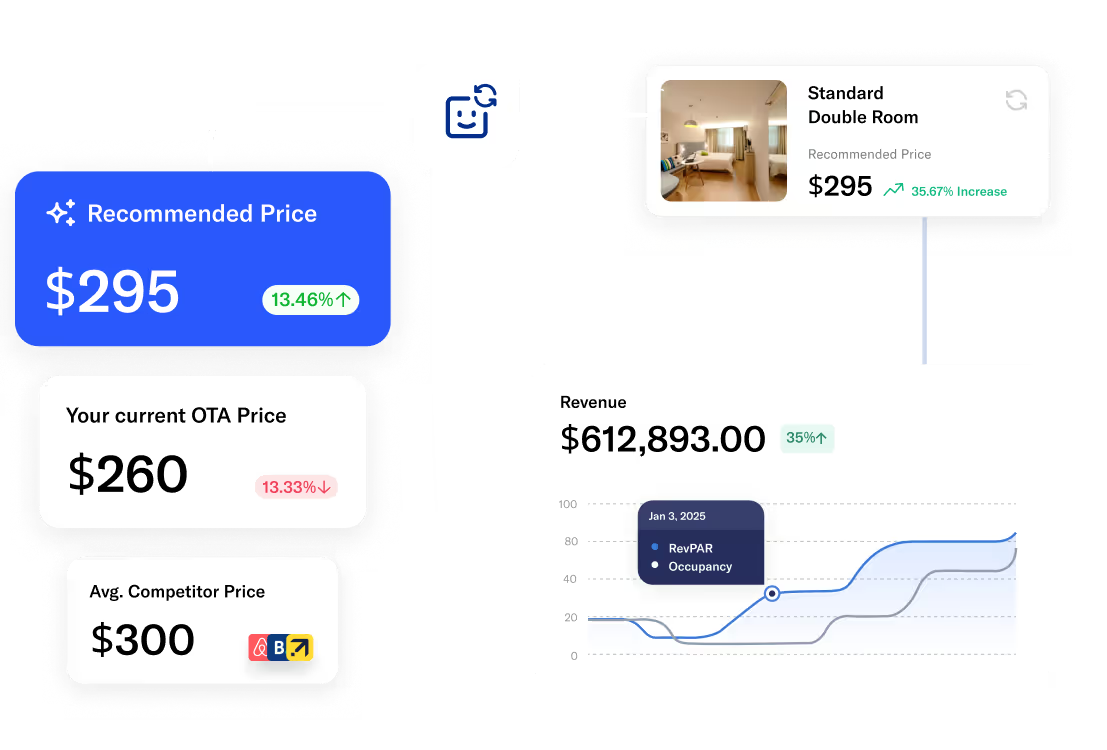
Tie the package to dynamic pricing: The room-rate component inside the bundle should rise automatically as demand and occupancy climb, the same way your standalone rates do.
{{revenue-management-two}}
How to Promote a Holiday Hotel Package
A holiday package needs its own promotional push, since generic room-sales tactics won't reach a traveler already researching a specific festival or event date.
Build a dedicated landing page. Give the package its own URL with real photos of the event and the rooms, a clear bulleted list of inclusions, and a one-click path into your booking engine. Avoid burying it inside a generic offers tab.
Segment your email list. Send romance-themed offers to past couples, early-access rebooking offers to guests who traveled during previous festival dates, and drive-market offers with free parking to guests within a short radius.
Run targeted paid social and search ads. Target fans of the specific festival or event on Instagram and TikTok, and bid on event-specific search terms rather than generic hotel keywords.
Partner with the event itself. Get listed on the festival's official "where to stay" page, and invite a local creator to document the stay-to-venue experience firsthand.
Create urgency without gimmicks. A visible countdown to the booking deadline or a simple "limited packages remaining" line accelerates a hesitant traveler's decision.
How roommaster Supports Holiday Package Management
A roommaster property management system turns holiday package management from a manual, multi-spreadsheet exercise into a single connected workflow.
Build and price the bundle in one place: Front-desk configuration lets you combine a room, dining credits, and local event tickets into one package rate, while ampliphi, roommaster's integrated AI-powered revenue management partner, adjusts the room-rate component automatically as real-time demand shifts.
Sell it commission-free: The roommaster Booking Engine presents package add-ons at checkout and lets guests book the bundle directly on your website, keeping full margin in-house instead of paying OTA commission.
Protect inventory with real restrictions: Minimum length of stay rules and inventory caps for a package can be set directly in the reservation grid, so a limited allotment of festival tickets never oversells.
Distribute without double-booking: The roommaster channel manager syncs package availability across OTAs in real time, so a sold-out bundle updates everywhere at once.
Personalize outreach with built-in CRM: Guest history lets you filter for past festival travelers or spa bookers and send them early-access offers automatically, rather than blasting a generic list.
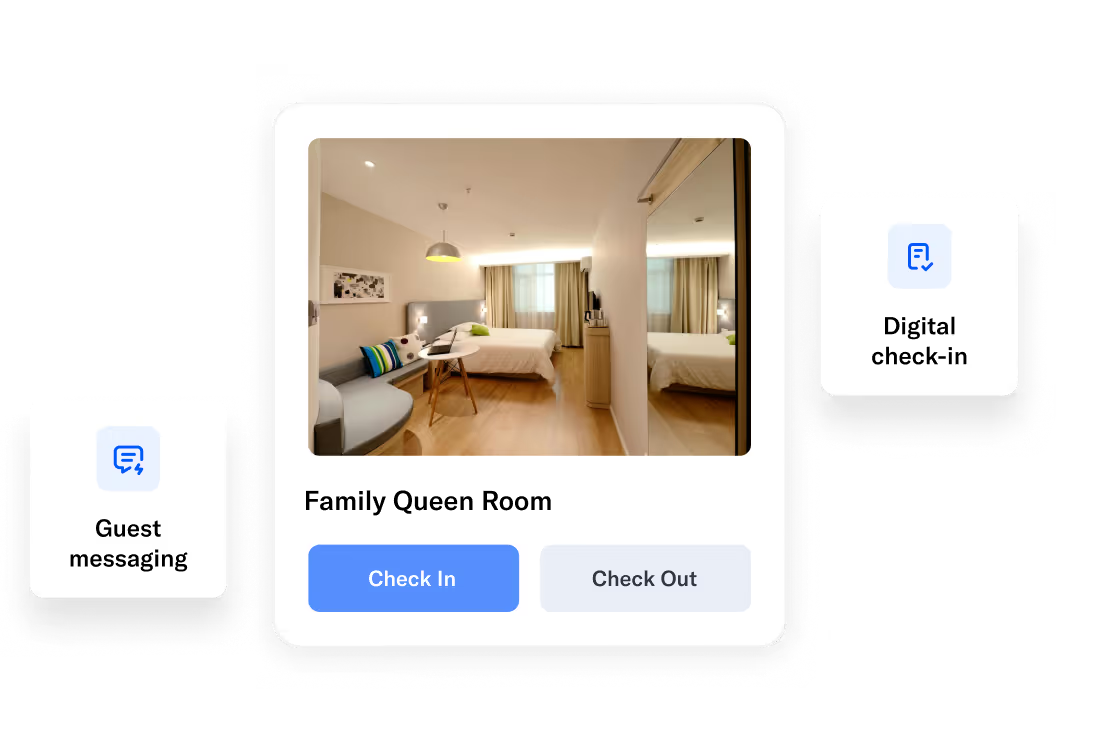
Keep front desk and housekeeping in sync: A live, color-coded housekeeping dashboard flags room-setup requirements like a welcome basket or festive decor before the guest arrives, and the roommaster Guest App lets package guests check in digitally and review their bundled itinerary from their phone.
Prove it was worth it: Built-in reporting tracks package-specific revenue against the hard cost of third-party vendors, so you can see actual margin rather than just booking count.
What Success Actually Looks Like Long-Term
The hotels that get holiday packages right stop treating them as a one-off seasonal discount and start treating them as a system they refine every year. The segment, the pricing math, and the restrictions stay the same; only the holiday changes. Properties running that system on roommaster build once and reuse the same package logic for every holiday on the calendar, from Christmas to Mardi Gras, instead of rebuilding it from scratch each season. That's the difference between a hotel that survives the holidays and one that profits from them.
{{cta-strip}}
Frequently Asked Questions
1. What makes a holiday hotel package different from a regular discounted room rate?
A package bundles the room with extras like meals or event access at one price. A discount just lowers the room rate without adding anything else. Guests get more value, and hotels earn more per booking.
2. How do hotels avoid underselling their rooms with a package?
They price against the bundle's full retail value, not the room alone. Profit is calculated using actual internal cost, not retail price, for each item. Skipping this step is the main way packages lose money.
3. Should a holiday package be sold through OTAs or only direct?
Direct is more profitable since it avoids commission and keeps your room rate hidden. OTAs can move remaining inventory quickly when a package isn't selling fast enough. Most hotels lean direct first, then use OTAs to clear leftovers.
4. What restrictions should every holiday package include?
A minimum length of stay to protect shoulder-date occupancy. A strict, often non-refundable cancellation policy, since packages usually involve prepaid third-party costs. Both are what keep a package profitable, not just popular.
5. How soon should a hotel start promoting a holiday package?
Three to six months ahead for major festivals. That gives early-bird email and paid search enough time to reach travelers first. Starting late means competing purely on urgency instead of demand.
6. What size hotel can realistically run holiday packages?
Any size property can, packages just need to scale with room count. A small independent hotel might run one or two segment-specific bundles instead of five. The mechanics stay the same regardless of property size.
7. Do holiday packages work for off-season or shoulder-season dates too?
Yes, and that's often where they perform best. A package can pull demand into slower weeks by pairing them with the main holiday dates through a minimum-stay requirement. This fills rooms that would otherwise sit empty.
8. How do you decide what to include in a package without losing money on it?
Include high-margin items the hotel already owns, like breakfast or late checkout, before adding paid third-party components. Anything sourced externally, like event tickets, should be priced at actual wholesale cost. This keeps the bundle attractive without eating into profit.
revenue-management-one
Put Your Hotel Pricing Optimization on Autopilot with AI
Mayela Lozano is a content strategist with a passion for hospitality and technology. She collaborates with roommaster on content creation, highlighting how technology can streamline hotel operations and enhance guest satisfaction. When she’s not creating content, Mayela loves to travel and spend time with her two little ones, discovering new adventures and making memories along the way.
Join Thousands of Hotels Thriving with roommaster
The transition to roommaster is straightforward and efficient. Our implementation team handles data migration including reservations, guest profiles, and historical information.
The transition to roommaster is straightforward and efficient. Our implementation team handles data migration including reservations, guest profiles, and historical information.
Hotel Metasearch Strategy: 8 Tactics That Drive Direct Bookings
September 22, 2026
Hotel Management
Marketing
Pet-Friendly Hotel Amenities & Package Ideas That Drive Revenue
September 22, 2026
Hotel Management
Marketing
Hotel Pet Fees: How Much Should You Charge?
September 22, 2026
Hotel Management
Marketing
Pet-Friendly Hotel Guide: Policy, Fees & Amenities
September 22, 2026
Marketing
Online Bookings
Hotel Metasearch: The Complete Guide For Hotels
September 22, 2026
Marketing
SEO Strategies For Hospitality Websites 2026
September 13, 2026
Marketing
Hotel Management
Christmas Vacation Packages: How to Design and Promote It
September 1, 2026
Marketing
Online Bookings
Bed and Breakfast Reservation Software: Increase Direct Bookings
August 24, 2026
Marketing
10 Best Hotel Review & Reputation Management Software 2026
August 17, 2026
Marketing
Online Bookings
Google Business Profile Optimization for Hotels: The Complete Checklist
August 3, 2026
Join Thousands of Hotels Thriving with roommaster
See how roommaster's unified platform can work for your property. Our team will walk you through features tailored to your specific needs and operations.

.png)
.png)
.png)