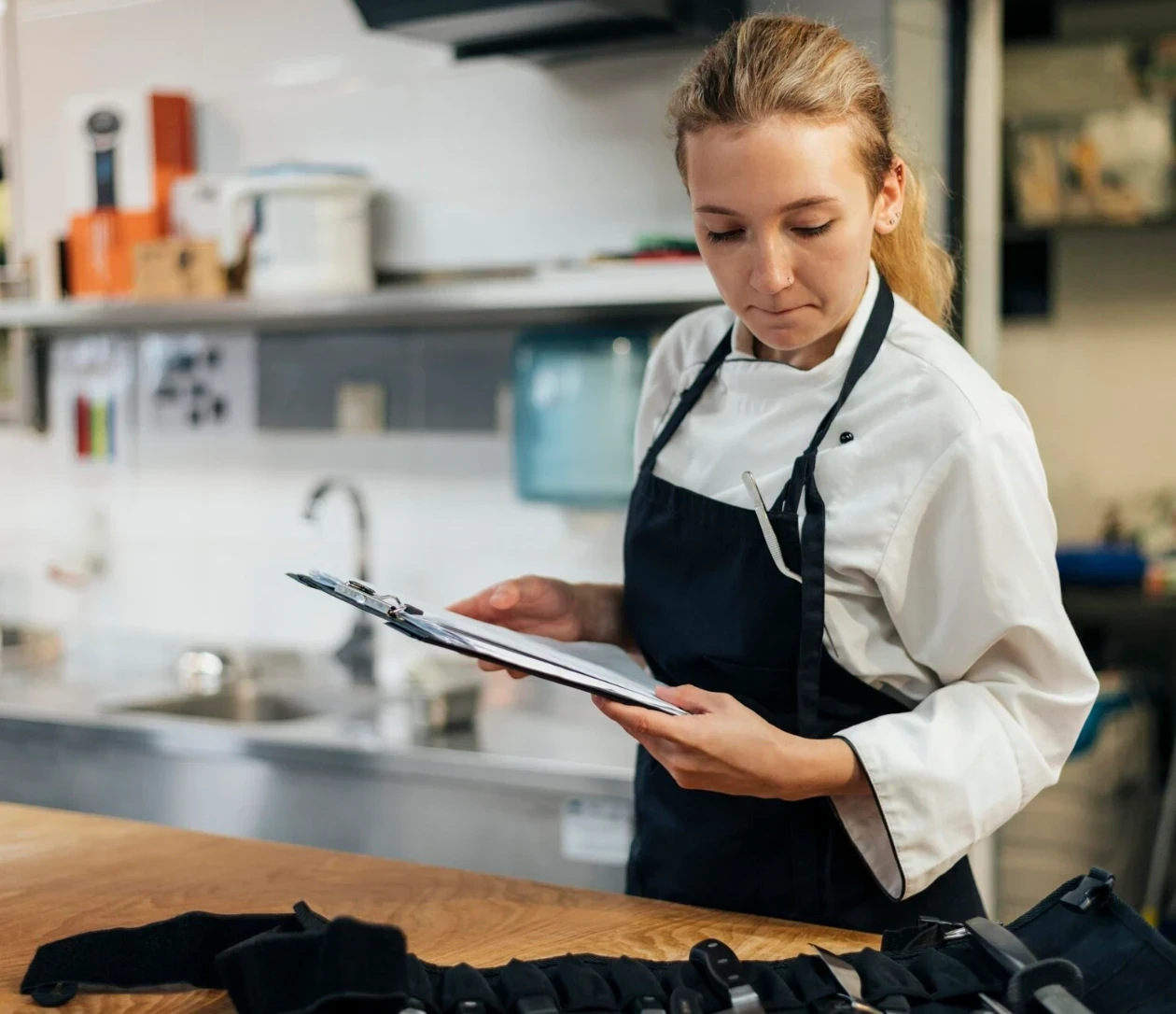
Who this is for: head chefs, kitchen managers, and food-safety leads at hotel restaurants, bars, cafes, and standalone venues who are responsible for food hygiene.
A note before you use this: food-safety rules differ by country and region, so follow your local food-safety law and your own food-safety management system. This checklist is a practical guide, not a substitute for official requirements.
A restaurant hygiene checklist covers food safety from delivery to service: personal hygiene, storage, temperature control, cross-contamination, cooking, cleaning, and allergens. It is the food-safety companion to your restaurant cleaning checklist. Copy it, run the checks on a schedule, and keep the records.
What You Get
- Personal hygiene and staff illness standards
- Deliveries, storage, and temperature control
- Cross-contamination, cooking, cooling, and reheating
- Cleaning, allergen control, and pest control
- Downloadable PDF and Word files you can print and keep
The Restaurant Hygiene Checklist
Personal Hygiene
- Wash hands on arrival, between tasks, and after handling waste.
- Wear a clean apron, tie or net hair, and keep a tidy appearance.
- Remove jewelry and keep nails short and unpolished.
- Cover any cut with a blue waterproof plaster.
- Report sickness and stay off per the exclusion policy.
Deliveries and Storage
- Check temperature, dates, and packaging on arrival.
- Refuse damaged, out-of-date, or warm deliveries.
- Chill and freeze items quickly after delivery.
- Date-mark all opened and prepared food.
- Use first-in, first-out so older stock goes first.
Temperature Control
- Keep chillers at or below the safe limit.
- Keep freezers at the safe frozen temperature.
- Hold hot food at or above the safe limit.
- Log fridge, freezer, and hot-holding temperatures.
- Use a clean probe and calibrate it regularly.
Food Prep and Cross-Contamination
- Use the correct color-coded board and knife for each food type.
- Keep raw meat away from ready-to-eat food.
- Wash fruit and vegetables before use.
- Sanitize surfaces between tasks.
- Defrost in the fridge, never at room temperature.
Cooking, Cooling, and Reheating
- Cook food to a safe core temperature.
- Probe the thickest part to confirm it is cooked.
- Cool cooked food fast and refrigerate within the limit.
- Reheat only once, to a safe core temperature.
- Do not refreeze food once it has thawed.
Cleaning, Allergens, and Pests
- Clean to remove soil, then sanitize with a food-safe product.
- Record the allergens in every dish and avoid cross-contact.
- Give accurate allergen information on request.
- Keep the kitchen sealed and run routine pest checks.
- Lid bins, remove waste often, and clean the area.
Common Mistakes to Avoid
- No temperature records. Food safety depends on logged cold, hot, and cooking temperatures.
- One board for everything. Color-code boards and knives to stop cross-contamination.
- Reheating more than once. Reheat food only one time, to a safe core temperature.
- Vague allergen answers. Record allergens per dish and give accurate information.
Frequently Asked Questions
1. What is the difference between a restaurant hygiene and a cleaning checklist?
A cleaning checklist covers the cleaning routine, such as opening, service, and close-down tasks. A hygiene checklist covers food safety, such as personal hygiene, temperature control, cross-contamination, cooking, and allergens. Use both together for a safe kitchen.
2. What should a restaurant hygiene checklist include?
Personal hygiene and illness rules, delivery and storage checks, temperature control with logs, cross-contamination controls, safe cooking, cooling and reheating, cleaning and sanitizing, and allergen and pest control. Each is checked on a schedule and recorded.
3. How often should food hygiene checks be done?
Personal hygiene and temperature checks happen through every shift, with cleaning and sanitizing as you go and on a daily schedule, and deeper checks weekly. Log each check so you can show an inspector the standard was met.
Keep Food-Safety Records Ready for Inspection
A checklist sets the standard, but an inspector wants the records. With roommaster, your property's tasks and records sit on one system, so temperature logs, cleaning checks, and corrective actions are timestamped and easy to produce instead of scattered across paper logs. The checklist sets the standard, and roommaster keeps the proof. See how it works on the roommaster platform.


