Best Trusted Hotel Management Software 2027

Hotel Management Software Shortlist · 1. Cloudbeds 2. Mews 3. roommaster 4. Stayntouch 5. RMS Cloud 6. Hotelogix 7. RoomRaccoon 8. Little Hotelier 9. eviivo 10. Oracle OPERA Cloud

Mayela Lozano
Author
Mayela Lozano
Content Strategist
Mark Splinter
Reviewer
Mark Splinter
Director of Operations, roommaster
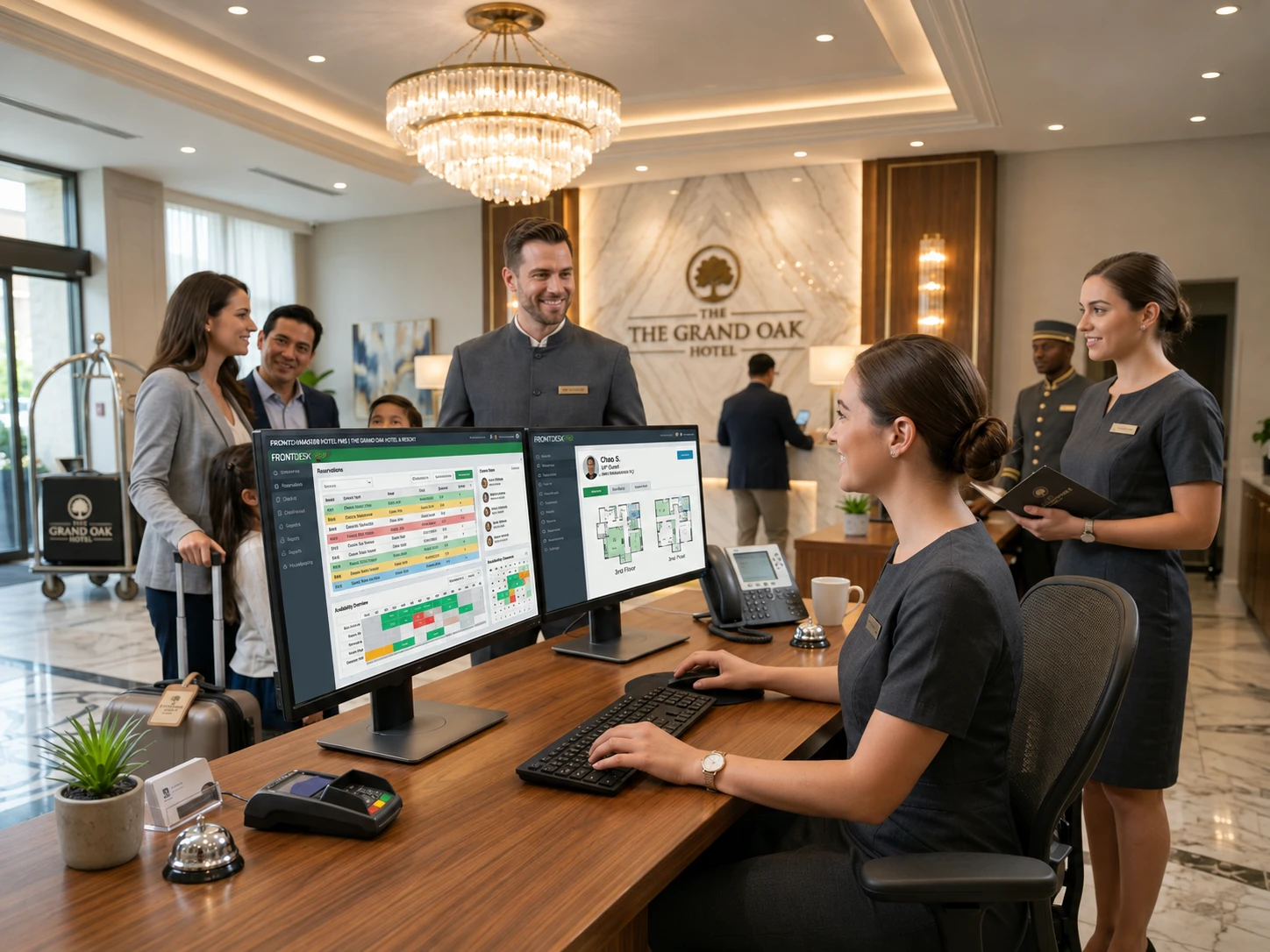
Hotel front desk team using roommaster
Comparison

Side-by-side feature & review comparison

Large & Mid-Size Properties
Cloudbeds
★ 4.3 (341)
Best forLarge & Mid-Size PropertiesPricingQuote-based, scales by roomsReviewer sentiment
UI
Value
Support
Automation
Integrations
Learn more
Large & Mid-Size Properties
Mews
★ 4.5 (59)
Best forLarge & Mid-Size PropertiesPricingQuote-based, modularReviewer sentiment
UI
Value
Support
Automation
Integrations
Learn more
Small, independent & mid-size hotels and groups
roommaster
★ 4.3 (129)
Best forSmall, independent & mid-size hotels and groupsPricingQuote-basedReviewer sentiment
UI
Value
Support
Automation
Integrations
Learn more
Independent & Multi-Property Portfolios
Stayntouch
★ 4.6 (85)
Best forIndependent & Multi-Property PortfoliosPricingQuote-based, per roomReviewer sentiment
UI
Value
Support
Automation
Integrations
Learn more
Multi-Property Portfolios & Enterprise Groups
RMS Cloud
★ 4.4 (412)
Best forMulti-Property Portfolios & Enterprise GroupsPricingQuote-basedReviewer sentiment
UI
Value
Support
Automation
Integrations
Learn more
Small & Mid-Size Independent Hotels
Hotelogix
★ 4.4 (251)
Best forSmall & Mid-Size Independent HotelsPricingPer-room subscriptionReviewer sentiment
UI
Value
Support
Automation
Integrations
Learn more
Bed & Breakfasts, Inns & Small Hotels
RoomRaccoon
★ 4.2 (72)
Best forBed & Breakfasts, Inns & Small HotelsPricingTiered subscriptionReviewer sentiment
UI
Value
Support
Automation
Integrations
Learn more
Bed & Breakfasts, Inns & Small Hotels
Little Hotelier
★ 4.1 (237)
Best forBed & Breakfasts, Inns & Small HotelsPricingFlat monthly tiersReviewer sentiment
UI
Value
Support
Automation
Integrations
Learn more
B&Bs, Boutique Hotels & Short-Term Vacation Rentals
eviivo
★ 4.0 (393)
Best forB&Bs, Boutique Hotels & Short-Term Vacation RentalsPricingPer-property subscriptionReviewer sentiment
UI
Value
Support
Automation
Integrations
Learn more
Multi Properties & Enterprise Hotel Groups
Oracle OPERA Cloud
★ 4.6 (761) HTR
Best forMulti Properties & Enterprise Hotel GroupsPricingEnterprise quoteReviewer sentiment
UI
Value
Support
Automation
Integrations
Learn more

Ratings are approximate Capterra snapshots. Reviewer sentiment is a directional read (strong / mixed / limited), not a score. Verify before buying.

Quick picks

The ten platforms covered in this guide, ranked on property size, type, region, budget, features and reviews:

  1. Cloudbeds is the most complete all-in-one, connecting operations, distribution and direct bookings on one database.
  2. Mews is the automation-first platform built to modernize operations, and the highest-rated tool here.
  3. roommaster is a proven, all-in-one cloud PMS for small and independent hotels, mid-size properties and groups.
  4. Stayntouch is a mobile-first PMS built for select-service and larger hotels going contactless.
  5. RMS Cloud is a scalable PMS strong with groups, multi-property and holiday-park operators.
  6. Hotelogix is an affordable cloud PMS with strong multi-property and multi-country reach.
  7. RoomRaccoon is an all-in-one for small independents with good automation and upsells.
  8. Little Hotelier is simple, flat-priced software built for B&Bs and inns under 20 rooms.
  9. eviivo is a reservation and guest platform for B&Bs, guesthouses and vacation rentals.
  10. Oracle OPERA Cloud is the enterprise incumbent for large hotels, resorts and brands.

What Is Hotel Management Software?

Hotel management software (HMS) is a digital platform that runs hotel operations, manages room inventory, check-ins and check-outs, housekeeping, billing and payments, and connects properties to online travel agencies (OTAs).

How We Evaluated These Platforms

We compared ten cloud-based hotel management platforms using public information. We did not rely on vendor claims alone, and we did not test each product hands-on.

Our sources were vendor product pages and public review data from Capterra, G2, Software Advice and Hotel Tech Report. We read the recurring praise and complaints in those reviews and weighed them against each platform's features and published pricing.

What Has Changed In Hotel Software For 2027

Cloud is the default, and on-premise is a liability: Legacy server-based systems still run in plenty of hotels, but new buyers choose cloud-based hotel management software almost without exception: access from any device, automatic updates, no server in a back office. The one fair caveat operators raise is offline access, and the better cloud tools now cache enough locally to keep the front desk moving through a short internet drop.

Contactless and mobile check-in moved from perk to baseline: Guests expect to check in on their phone, and lean-staffed properties need kiosk and mobile arrival to cover the desk.

Automation and integrated payments are where the value is: The platforms pulling ahead automate the repetitive work, room assignment, pre-arrival messaging, charge posting, and treat payments as core rather than a bolt-on.

AI assistants are starting to reach the PMS: The newest shift is connecting the PMS to AI assistants like ChatGPT, Claude, Copilot and Gemini, increasingly through an open standard called the Model Context Protocol, so staff can ask for arrivals, balances or booking pace in plain language instead of building reports. This is still early and only a few vendors offer it, roommaster among the first.

Recommended by

Top-rated hotel management software by property

By property size
By hotel type
By region
Small hotels Up to 20 rooms
Little Hotelier, eviivo, roommaster and RoomRaccoon
Best for B&Bs & inns
Independent & mid-size groups 20 to 150 rooms
roommaster, Cloudbeds, Mews and Hotelogix
Best all-rounders
Large hotel groups 151 to 300 rooms
Mews, RMS Cloud, Stayntouch and Cloudbeds
Scales to groups
Multi-property & enterprise 300+ rooms
Oracle OPERA Cloud, Mews and RMS Cloud
Enterprise depth
Boutique, motels, inns, B&Bs & resorts
roommaster, Cloudbeds, RoomRaccoon and Little Hotelier
All-in-one fit
Campground, RV & park
RMS Cloud and roommaster
Site & pitch mapping
Hostel & mixed inventory
Cloudbeds and roommaster
Bed-level inventory
Vacation rentals & villas
eviivo, Cloudbeds and RMS Cloud
Short-let channels
Luxury hotels
Oracle OPERA Cloud, Mews and Stayntouch
Premium service
Extended stay & serviced apartments
Mews, RMS Cloud, eviivo and Cloudbeds
Long-stay billing
North America
roommaster, Cloudbeds, Stayntouch and Hotelogix
US & Canada
Europe
Mews, RoomRaccoon, eviivo and roommaster
UK & EU
Asia Pacific
RMS Cloud, Hotelogix and Cloudbeds
Multi-country
Oceania
RMS Cloud, roommaster and Cloudbeds
Australia & NZ
Middle East
Oracle OPERA Cloud, Mews and Cloudbeds
Luxury & chains
Central America
Cloudbeds, Mews and Hotelogix
Resorts
Africa
Cloudbeds, RMS Cloud and Hotelogix
Independents
The 10 best

The 10 best hotel management software platforms for 2027

1
Cloudbeds
Large & Mid-Size Properties

Cloudbeds is a top-rated, unified platform with an integrated PMS, channel manager, booking engine and AI-driven revenue tools, all on a single database.

Built for large and mid-size properties, Cloudbeds replaces a patchwork of disconnected tools by putting the whole commercial operation on one data model. Distribution, pricing, payments, guest messaging and upsells all read from the same records, so nothing is re-keyed and nothing drifts out of sync. That shared foundation is also what makes its AI useful rather than bolted on: the Signals engine learns from live reservations, rates, demand and guest behavior to sharpen forecasting, auto-tune pricing and personalize offers that convert. It is a genuinely global platform, trusted by more than 20,000 hoteliers across 150+ countries, with 24/7 support and fast, low-friction onboarding.

Features
Pros
Cons
Best for

Cloudbeds is a flexible, all-in-one platform that suits a wide range of properties, but it is strongest in a few clear places.

Pricing

Cloudbeds prices per room, per month, with a monthly floor for the smallest properties. There is no single public rate card: what you pay depends on room count, region and which bundled modules you choose, so the tiers below are reported starting points, not fixed list prices.

Per-room range: core software generally runs about $9 to $16+ per room, per month. Smaller properties are subject to a monthly plan minimum, so a very small hotel still pays a baseline charge rather than just a few dollars.

Plan tiers (reported starting points)

Costs to budget separately

Official pricing is always tailored after a direct consultation and property audit, so treat these figures as planning benchmarks.

Reviews

Hotel Tech Report 4.6, with an HT Score near the top of the category, from 1,500+ reviews and 91% of hoteliers recommending it. Cloudbeds was also voted the #1 Hotel Management Software in the 2026 HotelTechAwards.

G2 4.3 (40 reviews) and Capterra 4.3 (358 reviews).

Reviewers consistently praise the all-in-one convenience, the clean interface and the breadth of OTA distribution. The most common critique is support response time during busy periods, which is also Cloudbeds' lowest sub-score.
2
Mews
Large & Mid-Size Properties

Mews is a cloud-native platform used globally, known for digital kiosks, automation and a modern guest journey for design-led hotels and growing groups.

Mews is built around tightly integrated modules designed to replace a stack of legacy, fragmented systems. The PMS centralizes room charts, group bookings and multi-currency invoicing; embedded Mews Payments tokenizes cards at booking and automates reconciliation; and the open marketplace connects to more than 1,000 third-party apps. Its real signature is flexibility: properties can sell inventory by the night, the hour or the fraction, from co-working desks to parking and meeting rooms, which makes it a natural fit for boutique brands and growing multi-property groups.

Features
Pros
Cons
Best for

Mews is best suited to specific property types, operating models and tech-forward management styles.

Less ideal for: very small B&Bs on a tight budget (under 10 to 15 rooms often find modular pricing harder to justify than flat-fee local tools), and enterprise resorts needing heavy native customization (intricate legacy banquet or conference scheduling can hit reporting or workflow limits).

Pricing

Mews does not publish a public rate card. Pricing is quote-based and tailored to your property, typically billed per room or bed, per month, and scaled across its tiers.

Plan tiers

Costs to budget separately

Official pricing is always custom-quoted after a consultation, so treat these figures as planning benchmarks.

Reviews

Hotel Tech Report HT Score near the top of the category, with 93% of 694 hoteliers highly recommending it, and voted Best PMS at the 2026 HotelTechAwards for the third year running.

G2 4.7 (21 reviews) and Capterra 4.6 (59 reviews), with ease of use rated 4.7.

Reviewers consistently praise the modern interface, deep automation and the open integration marketplace. The most common critiques are rigid native reporting and a setup and migration curve that takes time.
3
roommaster
Small, independent & mid-size hotels and groups

roommaster is unified, cloud-based hotel management software that manages reservations, front desk operations, housekeeping, billing and channel distribution.

Built for small, independent and mid-size hotels and groups, roommaster pairs more than 30 years of hospitality expertise with a recently reimagined, cloud-native platform: a cleaner interface with 60% fewer clicks, 3X faster performance and 99.95% uptime. One dashboard runs room charts, check-ins, group bookings and night audits, while the channel manager, commission-free booking engine, payments and guest messaging all work from the same records. On top of that sits a marketplace of 100+ integrations and a new AI Connector, so independent operators get all-in-one coverage without stitching together separate subscriptions.

Features
Pros
Cons
Best for
Pricing

roommaster uses a custom quote based on room count, available as one unified platform or by product, and scaled to your property size and operational needs, so you only pay for what you actually use.

What a quote typically includes

roommaster bundles rather than charging per add-on, so ask for the all-in figure including setup and migration.

View Pricing
Reviews

Hotel Tech Report 4.4 (166 reviews), HT Score 84, recommended by 89% of reviewers.

G2 4.8 (14 reviews), Capterra 4.3 and Software Advice 4.3.

roommaster is built on more than 30 years of hospitality experience and reports 97% client retention and 99.95% uptime. Hotels using it report 50% faster check-in, 40% fewer admin tasks and 50% less time spent on training.

“We’ve trusted roommaster for over 25 years. It keeps our entire hotel group running smoothly with everything we need in one easy-to-use system.”Jorge Venegas, General Manager, NUVO Suites
“roommaster PMS is a game changer for us. Easy calendar views, quick edits, real-time updates, and guest info auto-fills make managing bookings smooth and stress free.”Ryan Allison, Owner/President, Wood River Inn & Suites
4
Stayntouch
Independent & Multi-Property Portfolios

Stayntouch is a cloud-native PMS focused on mobile flexibility, guest self-service and open architecture, built for select-service and larger hotels.

Stayntouch is a mobile-first system that lets staff run operations from a tablet or smartphone rather than being anchored behind a traditional front desk. Guests can check in from their own phone in about 30 seconds, or at a self-service kiosk with a built-in key encoder, while housekeeping updates room status live from mobile devices. Hosted on AWS, it leans on an open API with 1,400+ integrations and charges no per-interface connection fees, which makes it a strong fit for select-service hotels, independent groups and multi-property portfolios that want modern, untethered operations and portfolio-level control.

Features
Pros
Cons
Best for

Stayntouch is purpose-built for segments where mobility, fast deployment and portfolio-level control matter most.

Less ideal for: very small B&Bs or single-room rentals (under 20 rooms), where simpler all-in-one tools are usually more cost-effective, and massive global branded franchises that mandate a proprietary enterprise PMS at the brand level.

Pricing

Stayntouch does not publish a public rate card. It is sold as two quote-based products, scaled to your property size, room count and the modules you need.

Two products

How it is priced

Add-on modules

There is no self-serve free trial; Stayntouch runs custom demos and tailored proposals, so request pricing for an all-in figure.

Reviews

Hotel Tech Report 4.7 (353 reviews), HT Score 91, one of the top-trending PMS platforms and ranked among the leaders for enterprise hotels. It was named Hotel PMS Company of the Year in the 2026 TravelTech Breakthrough Awards and reports a 96% customer retention rate.

Capterra 4.6 (85 reviews) and G2 4.4 (67 reviews), with high marks for ease of use and mobile flexibility.

Reviewers love the lightning-fast staff training, true mobile freedom and clean interface. The most common critiques are rigid reporting and extra clicks on complex group bookings.
5
RMS Cloud
Multi-Property Portfolios & Enterprise Groups

RMS Cloud is a cloud-native property management and reservation platform built for hospitality, strong with groups, multi-property and holiday parks.

Trusted by more than 6,000 properties across 70+ countries, RMS Cloud is built for everything from boutique and city hotels to RV parks, holiday campgrounds and mixed-use serviced apartments. Its signature is versatility and depth: a drag-and-drop booking chart, a built-in channel manager, native RMS Pay processing, dynamic rate automation and owner or trust accounting all sit in one platform, with a single-pane dashboard for operators running multiple sites. That configurability is also its trade-off, since the depth that suits complex, mixed or non-traditional inventory comes with a steeper setup than lighter all-in-one tools.

Features
Pros
Cons
Best for

RMS Cloud is not a one-size-fits-all urban hotel system; it is strongest for properties with complex, mixed or non-traditional inventory.

Less ideal for: lean small B&Bs or 10-room inns that want a plug-and-play system a single front-desk person can run in minutes, and full-service urban resorts whose business is dominated by complex conference and catering (BEOs), where conference-focused systems have the edge.

Pricing

RMS Cloud does not publish a fixed public price list. It uses a quote-based, modular model built around plan tiers and optional add-ons, scaled to your property type and size.

Plan tiers

Modular add-ons priced on top include EDM, interactive maps, owner and trust accounting, utilities management and RMS Vault.

Because pricing is modular, budget the all-in figure including the add-ons and integrations you need, not just the base plan.

Reviews

Hotel Tech Report 4.3 (246 reviews), HT Score 86, with hundreds of verified reviews across its product listings.

Capterra 4.4 (412 reviews), with strong marks for its fit with parks, campgrounds and multi-property operations.

Reviewers praise the time-saving automation, the standout fit for campgrounds and parks, and the two-way channel manager. The most common critiques are a steep learning curve on the backend rate menus and extra steps on complex group bookings.
6
Hotelogix
Small & Mid-Size Independent Hotels

Hotelogix is a comprehensive, cloud-based Property Management System (PMS) designed for independent hotels, boutique properties, B&Bs and multi-property groups.

A pioneer in cloud PMS since 2008, Hotelogix is trusted by 12,000+ hotels and 120,000+ users across 100+ countries in 13 languages, with especially strong adoption across APAC, India and the Americas. One all-in-one platform ties together the front desk, housekeeping, POS, revenue management, a built-in channel manager and a commission-free web booking engine, with multi-currency (29 currencies) and multi-language billing plus an offline mode for properties with patchy internet. Its appeal is an accessible, affordable entry point to a full cloud stack, which is why it is popular with cost-conscious independents that want modern tools without an enterprise price tag.

Features
Pros
Cons
Best for

Hotelogix is best suited for specific property sizes, scales and regions.

Less ideal for: giant enterprise chains (500+ rooms) needing deep custom ERPs, ultra-minimalist 1 to 4 room guesthouses better served by simpler tools, and teams whose top priority is a large open-API marketplace with plug-and-play fintech automation.

Pricing

Hotelogix prices independent properties and multi-property groups differently.

Independent property pricing is public, per room, per month, across three tiers, with regional pricing (America, ANZ, Asia, Europe, Africa, India) and monthly or annual billing. US annual-billed examples:

Metered add-ons sit on top: distribution connects (Channel Manager, GDS, web booking with payment gateway) at about $1 per room/month ($25 minimum); interfaces like EPABX, MailChimp, KOT, front-desk payment gateway or POS at about $25/month each; and Xero accounting at about $0.50 per room/month ($20 minimum).

Multi-property pricing is quote-based.

Billing floors mean very small properties still pay a monthly minimum, and annual billing is cheaper than monthly.

Reviews

Hotel Tech Report 4.8 (230 reviews), HT Score 85, with roughly 97% of reviewers recommending it and high marks for ease of use and support.

Capterra 4.4 (251 reviews) and Software Advice around 4.7. A small Trustpilot sample sits lower, around 2.2, skewed toward isolated billing or support disputes.

Reviewers consistently praise the 24/7 support, the easy drag-and-drop front desk and reliable OTA sync. The most common critiques are rigid custom reporting and that integrated channel management is gated to higher tiers.
7
RoomRaccoon
Bed & Breakfasts, Inns & Small Hotels

RoomRaccoon is a cloud-based, all-in-one PMS tailored for independent boutique hotels, B&Bs and small-to-mid-size properties, with automation and upsells.

RoomRaccoon bundles front-office operations, distribution and revenue tools into a single cloud platform, built to replace a patchwork of separate systems. Five core pillars (the PMS, a real-time channel manager across 200+ OTAs, GDS and metasearch, a commission-free booking engine, an integrated payment hub and automated guest communication) share one login, so bookings, rates and guest data stay in sync without manual re-keying. On top sits a family of Raccoon add-ons (RaccoonRev for AI pricing, RaccoonUpsell, RaccoonHousekeeping, RaccoonID and more) plus 300+ integrations, which is why it is a popular all-in-one for independents that want automation and upsells without an enterprise price tag.

Features
Pros
Cons
Best for

RoomRaccoon is best suited for specific property types and operational styles.

Less ideal for: large hotels and resorts (100+ rooms) with complex banquet halls, multi-outlet POS or heavy legacy enterprise integrations, and massive multi-national chains requiring deep custom hierarchy controls or on-premise servers.

Pricing

RoomRaccoon uses a tiered monthly subscription that scales with your room count (or hostel beds), user seats and the automation features you need, with about 20% off on annual billing. Independent Hotel pricing for an 18-room property:

Included vs extra: base tiers include the PMS, real-time two-way channel manager, commission-free booking engine and integrated payment gateway. Billed separately: payment processing transaction fees, RaccoonCardMachine hardware, and some add-on modules depending on tier.

Prices scale with room count, so larger properties pay more; a 14-day demo or trial is typically offered after an intro call.

Reviews

Hotel Tech Report around 4.7 (210+ reviews), HT Score around 80, with high marks for ease of use.

Capterra 4.2 (72 reviews) and G2 4.4, with value-for-money the weakest sub-score. Review sentiment runs roughly 82% positive on Capterra.

Independent B&B owners and small boutique operators generally love its simplicity, true all-in-one flow and time-saving automation. The most common critiques are support response times and occasional bugs or rigid invoicing on larger, busier properties.
8
Little Hotelier
Bed & Breakfasts, Inns & Small Hotels

Little Hotelier is widely recommended for independent B&Bs and small inns to handle multi-platform bookings, with simple setup and flat pricing.

Powered by SiteMinder, the global hotel-technology leader, Little Hotelier is purpose-built for small accommodation providers (typically 1 to 30 rooms) such as B&Bs, guesthouses, small motels, inns and holiday rentals, and is trusted by more than 53,000 properties worldwide. One platform combines a single synchronized calendar, a channel manager across 450+ OTAs, a commission-free direct booking engine, integrated payments and a mobile app, all designed to replace messy spreadsheets and multi-login channel-hopping. Its appeal is simplicity: a clean, color-coded, drag-and-drop system a non-technical owner can run in a shift, without the complexity of software built for larger hotels.

Features
Pros
Cons
Best for

Little Hotelier is best suited for independent, owner-operated small properties that want to ditch spreadsheets or multi-login channel-hopping without paying for heavy enterprise software.

Less ideal for: properties over about 35 rooms or multi-property portfolios (reporting and rate-management limits get restrictive, where Cloudbeds or Hotelogix fit better), hotels with on-site restaurants or bars needing a native POS, and high-volume properties wary of the entry plan's percentage booking fee.

Pricing

Little Hotelier prices primarily by room count. Pricing is published for 5 to 50 rooms on its site; above 50 rooms you contact the sales team. Billing is flexible month-to-month or annual with a free trial.

Plans

Costs to budget: Little Hotelier Payments has no set-up or subscription fee but carries per-transaction card processing fees; variable booking fees apply on certain plans (calculated on bookings net of cancellations); and add-ons like Dynamic Revenue Plus, Channels Plus or metasearch feeds add to the base. Prices exclude tax.

Trials: the home page offers a 30-day free trial; the pricing page runs a limited-time offer where Dynamic Revenue Plus and booking fees are free for the first 3 months, then 50% off for the next 9.

Match the plan to your booking volume: the Basics plan 1% fee can cost more than a flat Pro subscription once monthly booking revenue climbs, around $14,000 being a common break-even.

Reviews

Hotel Tech Report 4.6 (1,767 reviews), HT Score 96, ranked #2 in Hotel Management Software and a 2026 HotelTechAwards finalist.

Capterra around 4.1 and Trustpilot around 4, a 4.1 to 4.5 range across the major review sites.

Owners of small, independent properties generally love the clean calendar, reliable OTA sync that kills double-bookings, and the mobile app. The most common critiques are basic reporting, no native POS and occasional billing or support-wait friction.
9
eviivo
B&Bs, Boutique Hotels & Short-Term Vacation Rentals

eviivo is a cloud-based PMS built for independent boutique hotels, B&Bs, vacation rentals, serviced apartments and mixed-inventory portfolios.

The eviivo Suite is a modular, all-in-one platform designed to eliminate the need for juggling multiple standalone systems, trusted by 28,000+ properties across 70 countries. Its signature is mixed-inventory flexibility: it uniquely handles traditional hotel rooms and whole rental units side-by-side on the same calendar and rate grid. A family of Managers (Property, Website, Channel, Payment, Promo, Guest, Performance, Owner, Device and AI Pricing) covers everything from a color-coded master calendar and two-way OTA sync to trust accounting, smart-lock access codes and a 24/7 multilingual AI web concierge, with free open APIs on top. That breadth makes it a strong fit for independent operators and multi-property managers running a blend of hotels, B&Bs and rentals.

Features
Pros
Cons
Best for

eviivo Suite is built specifically for independent, small-to-medium-sized hospitality operators.

Less ideal for: large or enterprise resorts (150+ rooms) with complex on-premise POS, deep spa management or heavy legacy needs, and single-channel hosts who only list on Airbnb and never touch Booking.com, Expedia or direct web bookings.

Pricing

eviivo uses a flat monthly SaaS subscription scaled by inventory count and module selection, rather than taking a percentage commission on bookings. Pricing is shown per currency (USD, GBP, EUR, CHF, CAD).

Add-ons and usage fees

Match modules to what you actually use: the core subscription covers the master calendar and channel sync, and specialized Managers are billed per room or via usage.

Reviews

Hotel Tech Report HT Score around 87, ranked #1 in Vacation Rental Software and a 2026 HotelTechAwards winner, with about a 95% likelihood to recommend.

Capterra 4.0 (200+ reviews) and a Software Advice 2026 FrontRunner, scoring roughly 4.5 across the major review sites.

Owners praise the rock-solid two-way OTA sync, the genuine all-in-one value and patient onboarding reps. The most common critiques are a dense initial setup, inconsistent support wait times and limited deep customization.
10
Oracle OPERA Cloud
Multi Properties & Enterprise Hotel Groups

Oracle OPERA is used by large hotel chains, luxury resorts and high-volume casinos, built to handle complex, multi-departmental operations.

OPERA Cloud is the enterprise-grade, cloud-native hospitality platform built on Oracle Cloud Infrastructure (OCI), widely regarded as the industry gold standard for large chains, resorts and multi-property groups. Unlike its legacy on-premise predecessor (OPERA 5), the cloud version is designed for high availability, lower physical IT overhead and real-time mobility. It consolidates front office, reservations, rate and inventory management, housekeeping, billing and financials into one ecosystem, then scales through specialized modules (OPERA Cloud Central, Sales and Event Management, Distribution, Loyalty and Nor1 merchandising), deep native integration with Oracle MICROS Simphony POS, and the Oracle Hospitality Integration Platform (OHIP) REST APIs connecting hundreds of third-party vendors. That depth is its strength and its trade-off: unmatched for complex operations, but a heavy, costly deployment that is overkill for small independents.

Features
Pros
Cons
Best for

Oracle OPERA Cloud is not a one-size-fits-all solution; it is engineered for specific segments of the hospitality industry.

Less ideal for: independent boutique hotels and small inns under about 50 rooms (implementation costs, modular licensing and lengthy onboarding are hard to justify versus plug-and-play platforms like Cloudbeds or Little Hotelier), and lean, tech-first independents wanting a nimble, API-first best-of-breed stack (Mews or Apaleo usually fit better).

Pricing

Oracle does not publish a public rate card for OPERA Cloud. Pricing is customized and quoted directly by Oracle Hospitality or certified value-added resellers based on a property scope, brand affiliation and feature requirements, via a formal RFQ.

How pricing is structured

General cost expectations (third-party estimates, not official): comparison sites cite roughly $6 to $8 per room per month at a foundation level, up to $2,500 to $5,000 per month for 50 to 100 units, plus custom implementation fees. Costs vary sharply by property size and add-ons.

Tip: Ask for the all-in first-year figure, including setup, migration and payment fees, not just the monthly rate.

Reviews

Hotel Tech Report 4.6 (761 reviews), HT Score around 92, the #5 most-trending PMS, widely praised for enterprise depth.

Aggregated scores run lower on some sites (roughly G2 around 4.2 and Capterra around 3.6), a 3.6 to 4.6 range that splits sharply by property size and team experience.

Managers at full-service resorts and branded chains praise its unrivaled operational depth, true cloud freedom from on-premise servers and native Simphony POS sync. The most common critiques are a steep learning curve with heavy clicking, slower support on complex escalations, and overkill cost for smaller properties.

Pricing At A Glance

Hidden costs live below the per-room line: one-time setup and data migration, payment processing around 2.5 to 3 percent, per-integration fees, and OTA commissions of 15 to 25 percent that your direct booking engine is there to reduce.

How Much Does Hotel Management Software Cost?

Independent benchmarks from Hotel Tech Report put standard hotel software between roughly $4 and $15 per room per month, with enterprise tiers higher. The headline rate is the least useful number, because the real bill depends on which modules you switch on and what the vendor charges to onboard you. Here is the honest breakdown by property size.

Small hotels, 1 to 20 rooms: Flat-priced tools often land around $100 to $300 per month, or roughly $5 to $10 per room on per-room plans. Little Hotelier, eviivo, RoomRaccoon and Cloudbeds fit here. Setup is often low or waived, up to a few hundred dollars. Watch the booking-engine and payment fees rather than the subscription.

Independent hotels and mid-size groups, 20 to 150 rooms: Expect roughly $8 to $15 per room per month for a full unified platform with real channel management, a booking engine, automation and integrated payments. Cloudbeds, Mews, roommaster, Hotelogix and RMS Cloud compete here. Setup and migration typically run a few hundred to a couple of thousand dollars.

Large hotel groups, 151 to 300 rooms: Pricing moves to the $12 to $20-plus per room range or a negotiated quote, with revenue management, deeper integrations and multi-property rollups. Mews, RMS Cloud, Stayntouch and Oracle OPERA Cloud are the usual shortlist. Implementation is a formal project, not a weekend.

Multi-property and enterprise groups, 300-plus rooms: This is enterprise-quote territory, $15 to $25-plus per room or a custom contract, with professional-services implementation that can run well into five figures. Oracle OPERA Cloud, Mews, RMS Cloud and Stayntouch sit here.

Setup fees

One-time implementation and data-migration charges are real and often negotiable. Budget a few hundred to a couple of thousand dollars for small and mid-size properties, and five figures and up for enterprise. Free onboarding sometimes means self-serve, so ask exactly who does the migration.

Commission and transaction percentages

This is where the money hides. Your own booking engine is usually commission-free; that is the point of paying a subscription, and it is how you claw back margin from the OTAs. The OTAs themselves charge roughly 15 to 25 percent per booking, which is not the software's fee but is the cost your channel strategy is fighting. Payment processing typically runs around 2.5 to 3 percent plus a per-transaction fee. Some tools also take a small cut of upsells or bookings through their engine, so ask directly.

Total cost of ownership

The figure that matters is not the per-room rate. It is the all-in first-year number: subscription, plus setup and migration, plus payment processing, plus per-integration connection fees, plus training, plus any hardware, plus the OTA commissions your direct-booking strategy is meant to reduce. Two tools with the same monthly rate can differ by thousands once setup, integrations and transaction fees are counted. Ask every vendor for a 12-month all-in quote, in writing, and compare those, not the sticker price.

Published Or Quote-Only

How a vendor prices tells you how a vendor sells. Published, flat pricing lets you budget without a sales call; quote-only pricing means a conversation, and usually room to negotiate, but also less certainty up front. Neither is wrong, but know which you are dealing with before you book the demo.

Whichever model you face, the number that matters is the same: the 12-month all-in figure including setup, migration, payment processing and per-integration fees. Published pricing hides setup fees as often as quote-only pricing does, so ask for the all-in total either way.

The Return On A Good System

The return on a good system is concrete, not abstract. It shows up in four places:

The honest caveat: the ROI is real only if your team actually adopts the system. A powerful platform half-used, with staff keeping a shadow spreadsheet, returns little. Adoption, not features, is what turns the spend into a return.

Unified Platform Vs Built-From-Integrations

Before any feature comparison, settle this: do you want one unified platform, or a stack built from integrations? It is the most consequential choice on this page, and the one vendors blur.

A unified platform (Cloudbeds, Mews, roommaster, Hotelogix, RMS Cloud, RoomRaccoon) gives you the PMS, channel manager and booking engine as one product, on one database, with one login, one support line and one bill. Because the modules share data natively, a booking on Expedia closes the room everywhere and posts to the folio with no re-keying. Overbookings and double data entry are designed out rather than patched over. For most independent and mid-size hotels, this is the safer path.

A built-from-integrations stack pairs a focused PMS (Stayntouch for mobile-first front desk, Oracle OPERA for enterprise) with a separate channel manager, booking engine and revenue tool, connected by integrations. You can get a stronger result in any single area, but every integration is a seam that can lag, break or silently drop a reservation, and keeping them talking becomes your job. It suits larger operations with the staff and budget to run a stack, not a lean team.

The honest rule: the smaller and leaner your team, the more a unified platform is worth. The larger and more specialized your operation, the more a best-of-breed stack can pay off. Decide this first, because it eliminates half the list before you look at a single feature.

What To Require And How To Verify

Compliance is the single most searched topic in this category, and the one buyers most often take on trust. Do not. A badge on a website is a claim, not proof, and certifications lapse, change scope and expire. Treat the items below as requirements to confirm in writing, not boxes a sales rep ticks for you.

How to verify, in one line each: ask for the document, not the claim; check the date and scope; confirm it covers the specific product and data centre you will use; and get the data processing agreement and breach-notification terms in the contract. If a vendor cannot produce current attestations, that is your answer. This guide does not publish per-vendor certification status because it changes too often to state reliably; the only trustworthy source is the vendor's current, dated documentation handed to you directly.

Integration And Technical Architecture

Two tools can both integrate with everything and mean completely different things by it. The architecture decides how much engineering you own, so pin down three things before you sign.

The rule of thumb: the more of your stack is native, the less integration work you own and the fewer seams can break. The more it is marketplace add-ons, the more flexible but the more you maintain.

Ops-Led Or IT-Led

The best tool for your property also depends on who will run and maintain it. This is the axis buyers skip, and it is the one that most often explains a failed rollout.

The mistake is buying an API-first platform for an ops team with no one to use the API, or forcing a technical team into a closed bundle they will outgrow. Match the architecture to the people, not the other way around.

Single Property Or Portfolio

Room count is not the whole picture of scale. A 15-room single property and a 15-room property inside a 40-property group need different things, and conflating them is how buyers end up with a tool that cannot report across the estate.

If you plan to add properties, buy for the portfolio you are heading toward, not just the one building you run today. Migrating a group onto a new platform later is far more painful than choosing one that scales now.

How To Choose The Best Hotel Management Software

Work through this in order and you will shortlist the right two or three without a dozen sales calls:

Common Mistakes Hotels Make When Buying

Implementation And Migration: How Long It Takes

Switching hotel software is the part vendors downplay and operators underestimate. Realistic timelines run about three weeks for a small property and four-plus weeks for a larger one, and the risk lives in data migration: reservations, guest profiles and rate plans moving cleanly from the old system to the new one.

Confirm in writing who does the migration, how long it takes, and what it costs, because we handle migration and free onboarding can mean very different things once the contract is signed.

Core Functions And Components

For reference, a complete hotel management system is built from these components. Use it as a checklist when you compare quotes, and confirm each one is native, an add-on, or an integration:

Key feature comparison

What is native, add-on or an integration

SoftwarePMSChannel managerBooking engineRevenue managementPaymentsReservations calendarFront deskOTAsHousekeepingGuest managementMetasearchWebsite builderAccounting & POSReporting & analytics
CloudbedsNativeNativeNativeAdd-onNativeNativeNativeNativeNativeNativeAdd-onAdd-onIntegrationNative
MewsNativeNativeNativeAdd-onNativeNativeNativeNativeNativeNativeAdd-onIntegrationNativeNative
roommasterNativeNativeNativeNativeNativeNativeNativeNativeNativeNativeNativeIntegrationNativeNative
StayntouchNativeIntegrationAdd-onIntegrationIntegrationNativeNativeIntegrationNativeNativeIntegrationIntegrationIntegrationNative
RMS CloudNativeNativeNativeAdd-onAdd-onNativeNativeNativeNativeNativeIntegrationIntegrationIntegrationNative
HotelogixNativeNativeNativeIntegrationIntegrationNativeNativeNativeNativeNativeIntegrationIntegrationIntegrationNative
RoomRaccoonNativeNativeNativeAdd-onNativeNativeNativeNativeAdd-onNativeAdd-onNativeIntegrationNative
Little HotelierNativeNativeNativeLimitedNativeNativeNativeNativeLimitedNativeAdd-onNativeIntegrationNative
eviivoNativeNativeNativeLimitedNativeNativeNativeNativeLimitedNativeIntegrationNativeIntegrationNative
Oracle OPERA CloudNativeIntegrationAdd-onAdd-onIntegrationNativeNativeIntegrationNativeNativeIntegrationIntegrationNativeNative

Native = built in. Add-on = same vendor, extra module. Integration = third-party connection.

FAQ

Frequently asked questions

What is the best hotel management software overall?

There is no single best for every property. For most independents and small groups wanting one complete all-in-one, Cloudbeds is the strongest overall pick, with Mews close behind for automation and guest experience. The right choice depends on your property type, size and budget, which is why you should shortlist two or three and demo them with your own workflows before deciding.

How much does hotel management software cost?

Standard hotel software runs roughly $4 to $15 per room per month, with budget tiers lower and enterprise tiers above $15. The per-room rate is only part of it. Add implementation and migration fees, training, per-integration charges and payment processing of around 2.5 to 3 percent. Always compare the all-in first-year figure, not the monthly rate.

What is the difference between a PMS, a channel manager and a booking engine?

The property management system (PMS) is the core that holds your rooms, rates, reservations and guest folios. The channel manager syncs your rates and availability across OTAs like Booking.com and Expedia to prevent overbookings. The booking engine takes direct, commission-free reservations on your own website. A unified platform provides all three on one database.

What is the best hotel management software for small hotels and B&Bs?

For very small properties and B&Bs under about 20 rooms, Little Hotelier and eviivo are purpose-built and simple to run, while RoomRaccoon suits those wanting more automation. Slightly larger independents are often better served by Cloudbeds, roommaster or Hotelogix, which scale further without much added complexity.

Should I choose cloud-based or on-premise hotel software?

For almost every new buyer, cloud-based is the right choice: access from any device, automatic updates and no server to maintain. The main concern operators raise is offline access during an internet outage, and the better cloud tools now cache enough locally to keep the front desk running through a short drop. On-premise systems are increasingly a legacy liability.

How long does it take to switch hotel management software?

Expect about three weeks for a small property and four-plus weeks for a larger one. The critical risk is data migration: moving reservations, guest profiles and rate plans cleanly. Switch during low occupancy, keep the old system readable until you have verified the new data, and confirm in writing who handles migration, how long it takes and what it costs.

Is an all-in-one platform better than separate best-of-breed tools?

For most independent and mid-size hotels, yes. A unified platform shares one database, so overbookings and double data entry are designed out, and you have one support line and one bill. A best-of-breed stack can be stronger in any single area but adds integration points that can break, and it suits larger operations with the staff to manage it.

On this page
ComparisonWhat is hotel softwareRecommended by propertyThe 10 best platformsBuyer's guideFAQ
Still unsure?

Book a free demo and our team will help you compare, shortlist and pick the right fit.

Book a Demo